Importance of APIs and SDKs
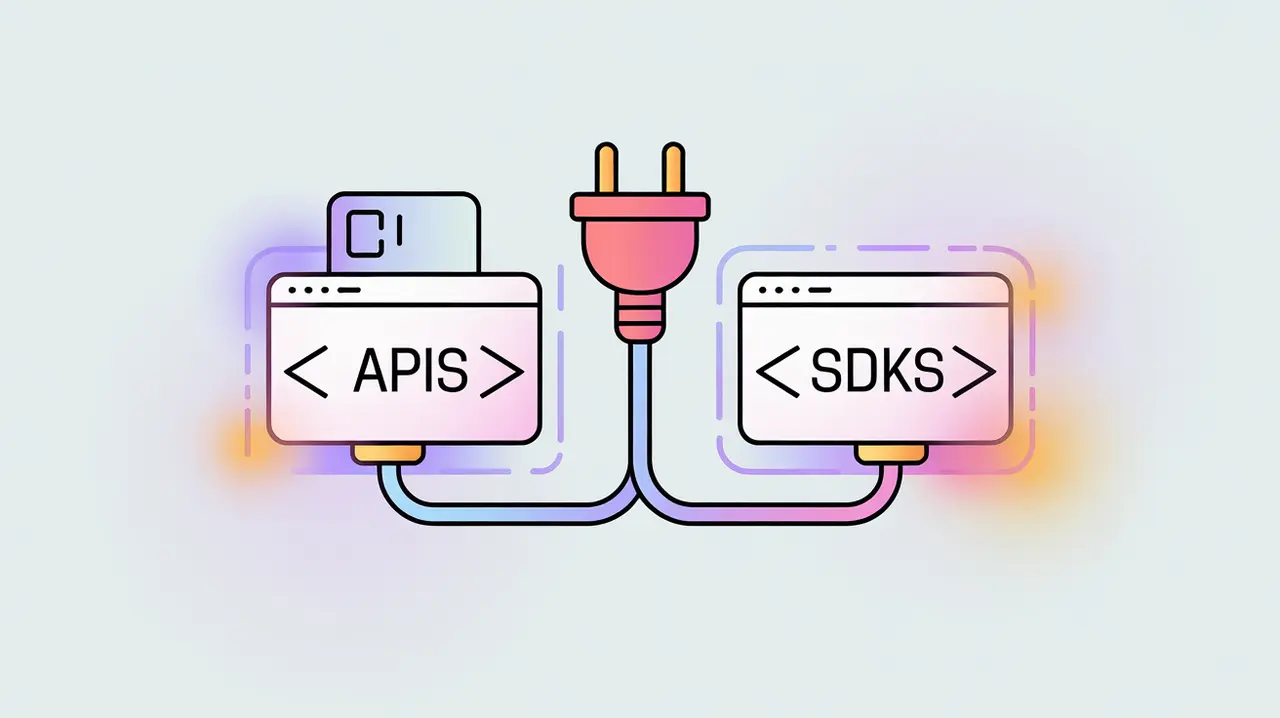
APIs (Application Programming Interfaces) and SDKs (Software Development Kits) are tools that enable different software systems to connect and extend functionality. APIs provide defined methods for communication between applications, while SDKs package together tools, libraries, and documentation that simplify development on a given platform. Their importance today lies in making modern digital ecosystems interoperable, customizable, and faster to build.
For social innovation and international development, APIs and SDKs matter because they allow mission-driven organizations to integrate external services into their platforms, without building everything from scratch. This includes payment systems, SMS messaging, and AI capabilities. APIs accelerate innovation while keeping costs manageable.
Definition and Key Features
APIs act as bridges, exposing specific functions of an application so other systems can use them securely. REST, GraphQL, and gRPC are common API styles, each with different strengths. SDKs complement APIs by giving developers pre-built code, testing tools, and documentation for faster adoption. Together, they provide a modular way to build digital systems.
They are not the same as full applications, which deliver end-to-end functionality. Nor are they equivalent to plug-ins, which extend existing systems but do not necessarily expose their functions externally. APIs and SDKs are focused on making software interoperable and extensible.
How this Works in Practice
In practice, APIs allow organizations to connect to services such as cloud AI models, geospatial datasets, or payment processors. SDKs make it easier to integrate these services into web, mobile, or backend applications. For example, a humanitarian app might use an SMS API to deliver alerts, while an SDK from a mapping provider enables offline geospatial tools. Access control, versioning, and rate limits are critical governance features that ensure APIs remain secure and reliable.
Challenges include dependency on external providers, potential changes in pricing or availability, and security risks if APIs are misconfigured. SDKs can also create lock-in when tailored too narrowly to a single provider. Careful design and diversification help organizations remain flexible.
Implications for Social Innovators
APIs and SDKs expand what mission-driven organizations can achieve with limited resources. Health programs can integrate electronic medical record systems with diagnostic AI via APIs. Education platforms can add adaptive learning features using SDKs from content or analytics providers. Humanitarian agencies can connect crisis-mapping platforms to live satellite data through APIs, improving situational awareness. Civil society groups can extend their advocacy tools with SDKs for social media publishing or data visualization.
By leveraging APIs and SDKs, organizations can stitch together powerful, flexible systems that maximize impact while minimizing development burden.