Importance of REST
REST (Representational State Transfer) is an architectural style for designing web services that use standard HTTP methods such as GET, POST, PUT, and DELETE to interact with resources. Its importance today lies in its simplicity, scalability, and interoperability, making it one of the most widely used approaches for building APIs that connect applications, data, and AI systems. REST has become a cornerstone of how digital platforms expose services and enable integration.
For social innovation and international development, REST matters because mission-driven organizations often rely on diverse tools that need to communicate with each other. REST APIs make it easier to connect health systems, learning platforms, and humanitarian databases without requiring costly or proprietary integration work.
Definition and Key Features
REST is based on principles such as statelessness (each request contains all necessary information), resource-based URLs, and standardized HTTP methods. Responses are usually formatted in JSON or XML, making them easy to parse across platforms. RESTful APIs are designed to be lightweight, scalable, and accessible, even for developers with limited resources.
REST is not the same as SOAP (Simple Object Access Protocol), which is more complex and uses XML exclusively. Nor is it equivalent to GraphQL, which allows clients to request specific subsets of data. REST emphasizes simplicity, standardization, and broad compatibility across the web.
How this Works in Practice
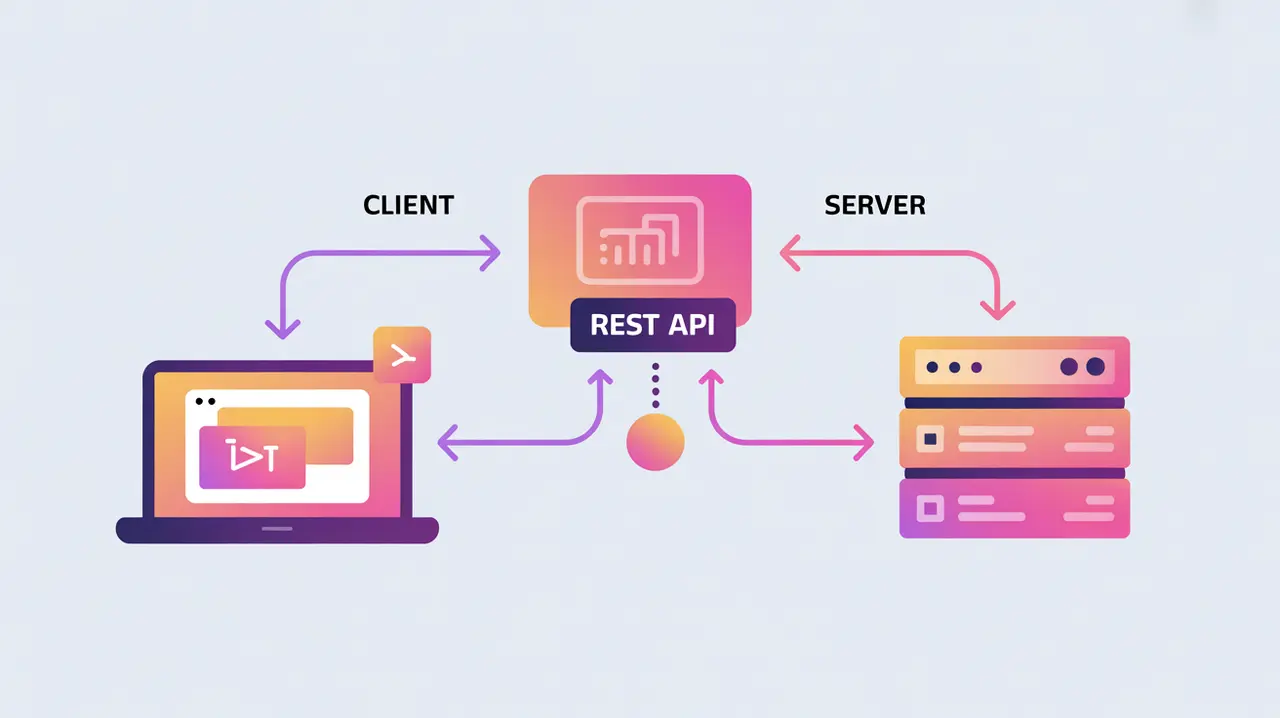
In practice, REST APIs expose endpoints that represent resources, such as /patients, /students, or /reports. A client sends an HTTP request to an endpoint, and the server responds with data or confirmation of an action. This structure allows systems to be loosely coupled, where each component evolves independently as long as the interface remains consistent.
Challenges include over-fetching (receiving more data than needed), under-fetching (not receiving enough data in one request), and ensuring strong security through authentication and authorization. Despite these limitations, REST remains a dominant model because it balances simplicity with functionality, making it suitable for many use cases.
Implications for Social Innovators
REST enables mission-driven organizations to integrate digital tools and data sources seamlessly. Health programs can connect mobile diagnostic apps with centralized patient record systems through RESTful APIs. Education platforms can use REST to pull content from open repositories into classroom apps. Humanitarian agencies can expose crisis data through REST APIs so partners and governments can access information quickly.
By offering a simple and universal framework for system-to-system communication, REST makes it easier for organizations to build interoperable solutions that support community needs.