Importance of Federated Learning
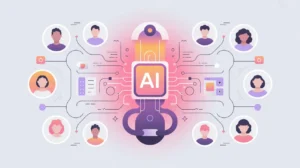
Federated Learning is a machine learning approach that enables multiple devices or organizations to collaboratively train a shared model without exchanging raw data. Instead, models are trained locally, and only the learned parameters or updates are aggregated centrally. Its importance today lies in enabling powerful AI while preserving privacy, reducing data transfer costs, and respecting data sovereignty.
For social innovation and international development, federated learning matters because mission-driven organizations often work with sensitive health, education, or humanitarian data. This approach allows them to benefit from collective intelligence while ensuring individuals’ data remains protected and decentralized.
Definition and Key Features
Federated learning was introduced by Google in 2016 to improve mobile applications like predictive text without compromising user privacy. The approach has since been adopted in healthcare, finance, and cross-institutional collaborations. It enables organizations to build stronger models from distributed data sources that could not otherwise be pooled due to legal, ethical, or logistical barriers.
It is not the same as centralized training, where all data is aggregated into one location, nor is it equivalent to differential privacy, though the two can be combined. Federated learning focuses on decentralization of training while still producing a global model.
How this Works in Practice
In practice, federated learning might involve hospitals training local models on patient data, sending only model updates to a central aggregator that builds a stronger diagnostic model. Similarly, schools could collaborate to improve adaptive learning tools without exposing individual student records. Technical safeguards such as secure aggregation and homomorphic encryption are often layered on top to prevent reconstruction of sensitive information.
Challenges include ensuring consistency across heterogeneous data sources, managing communication overhead, and mitigating risks that local updates could leak information. Governance challenges also arise around ownership of models, accountability, and equitable access to benefits.
Implications for Social Innovators
Federated learning has significant applications in mission-driven sectors. Health programs can build shared diagnostic tools across hospitals without moving patient data. Education initiatives can collaborate across regions to improve AI tutors while protecting student privacy. Humanitarian agencies can combine insights across field offices without exposing sensitive population records. Civil society groups can advocate for federated approaches as alternatives to centralized data collection, ensuring that communities retain sovereignty over their information.
By enabling collaboration without compromising privacy, federated learning expands the possibilities of AI for social good while respecting the rights and dignity of individuals.