Importance of Agent Frameworks
Agent Frameworks are platforms and toolkits that allow developers to build autonomous or semi-autonomous software agents capable of perceiving environments, making decisions, and taking actions. These frameworks integrate AI models, planning systems, and APIs to enable agents to operate in complex workflows. Their importance today lies in the rise of AI-driven agents that can handle multi-step tasks, coordinate across systems, and extend human capacity.
For social innovation and international development, agent frameworks matter because they can automate repetitive yet critical work. This includes monitoring health data, managing education workflows, and coordinating humanitarian logistics. Agent frameworks free people to focus on higher-value tasks that require empathy and judgment.
Definition and Key Features
Agent frameworks provide the infrastructure for constructing and deploying intelligent agents. Examples include LangChain, Haystack, AutoGPT-style frameworks, and enterprise platforms that manage orchestration, memory, and multi-tool integration. They define how agents perceive inputs, choose actions, and interact with digital environments.
They are not the same as chatbots, which generally follow predefined interaction patterns. Nor are they equivalent to copilots, which remain tightly bound to human-in-the-loop workflows. Agent frameworks are designed for autonomy, scalability, and orchestration across complex systems.
How this Works in Practice
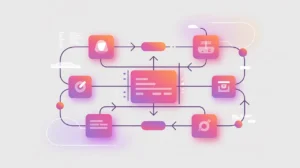
In practice, agent frameworks allow developers to chain together models, data sources, and APIs into structured behaviors. For example, an agent might retrieve information from a database, call an external API, analyze the results, and then execute a follow-up action. This can happen all without explicit step-by-step human direction. Features such as long-term memory, reasoning modules, and error handling improve reliability.
Challenges include ensuring safety, preventing unintended behavior, and balancing autonomy with human oversight. Resource demands can also be high, as agents may trigger multiple API calls or processes. Governance and monitoring are critical to align agents with organizational values and mission goals.
Implications for Social Innovators
Agent frameworks open powerful opportunities for mission-driven organizations. Health systems can deploy agents to monitor supply chains, flag anomalies in diagnostic data, or manage patient follow-ups. Education initiatives can use agents to automate tutoring support, track progress, and personalize learning. Humanitarian agencies can run agents to coordinate logistics, analyze incoming field reports, and optimize aid distribution. Civil society groups can create advocacy agents that monitor policy debates and trigger timely actions.
By enabling AI-driven orchestration of tasks, agent frameworks help organizations scale impact, improve efficiency, and respond rapidly to changing conditions.