Importance of Surveillance Risks and Safeguarding
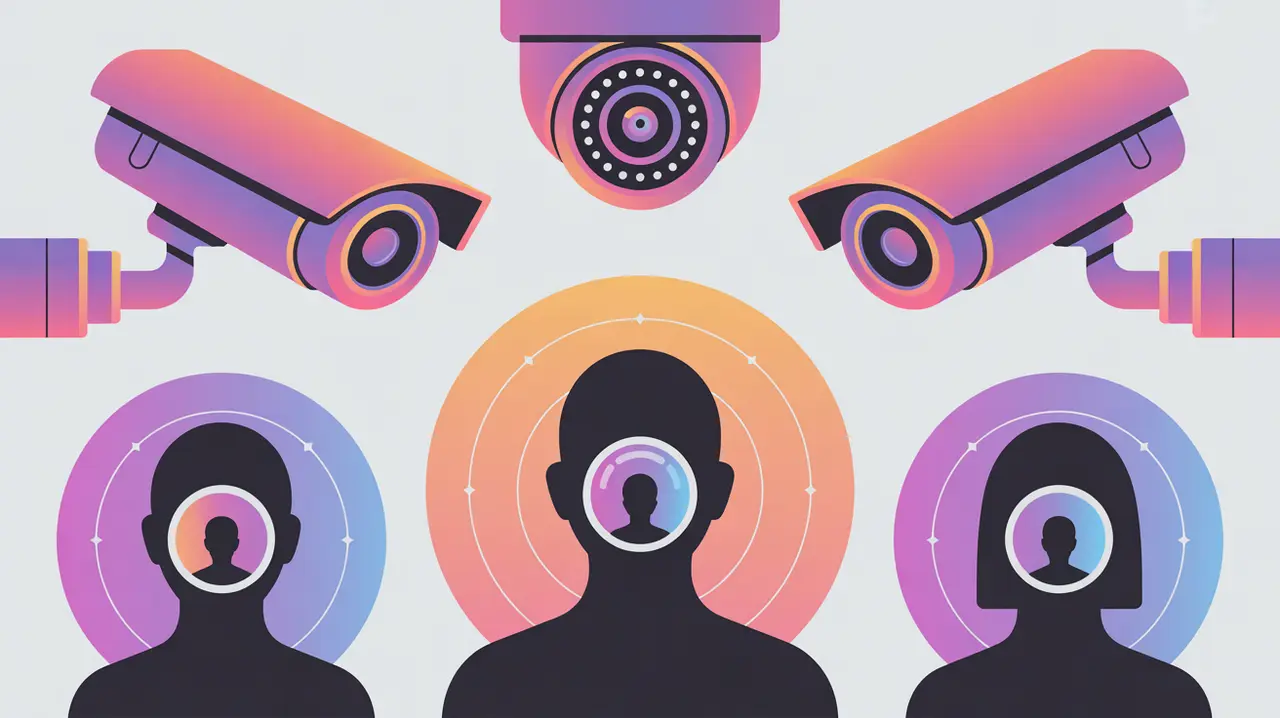
Surveillance Risks and Safeguarding refer to the potential harms created when AI and digital technologies are used to monitor individuals or groups, and the protective measures needed to mitigate those harms. AI systems enable new forms of surveillance through facial recognition, predictive analytics, and large-scale data aggregation. Their importance today lies in the balance between legitimate uses and the risks of abuse, overreach, and erosion of fundamental rights.
For social innovation and international development, safeguarding against surveillance risks matters because mission-driven organizations often work with vulnerable populations whose safety and trust depend on careful, rights-based data practices.
Definition and Key Features
Surveillance risks emerge when data collection is excessive, poorly governed, or repurposed without consent. AI amplifies these risks through its ability to process massive datasets and infer sensitive details. Safeguarding includes principles of necessity, proportionality, transparency, and accountability, supported by data protection laws and human rights frameworks.
This is not the same as routine monitoring and evaluation, which collects program data for accountability and learning. Nor is it equivalent to cybersecurity, which protects systems from external attacks. Surveillance risk addresses the misuse of observation itself, even within otherwise secure systems.
How this Works in Practice
In practice, risks may arise when humanitarian agencies use biometric systems for aid distribution, and that data is later accessed by hostile actors. Public health programs may collect mobility data for pandemic response without clear limits, creating risks of long-term tracking. Safeguarding requires limiting data collection, securing informed consent, and designing systems with privacy-preserving techniques such as differential privacy or federated learning.
Challenges include blurred boundaries between surveillance and service delivery, pressure from governments or funders for extensive data collection, and lack of resources for strong safeguards. Communities often have little power to resist or question intrusive systems.
Implications for Social Innovators
Surveillance risks and safeguarding are critical across mission-driven sectors. Health initiatives must protect patient privacy when using AI-driven monitoring systems. Education programs must avoid intrusive student surveillance while still supporting learning. Humanitarian agencies must design aid systems that minimize risks of tracking or targeting vulnerable groups. Civil society organizations advocate for safeguards that prioritize dignity, autonomy, and rights in all data practices.
By embedding safeguarding measures into AI and digital practices, organizations protect communities from surveillance harms while ensuring technology remains a tool for empowerment rather than control.