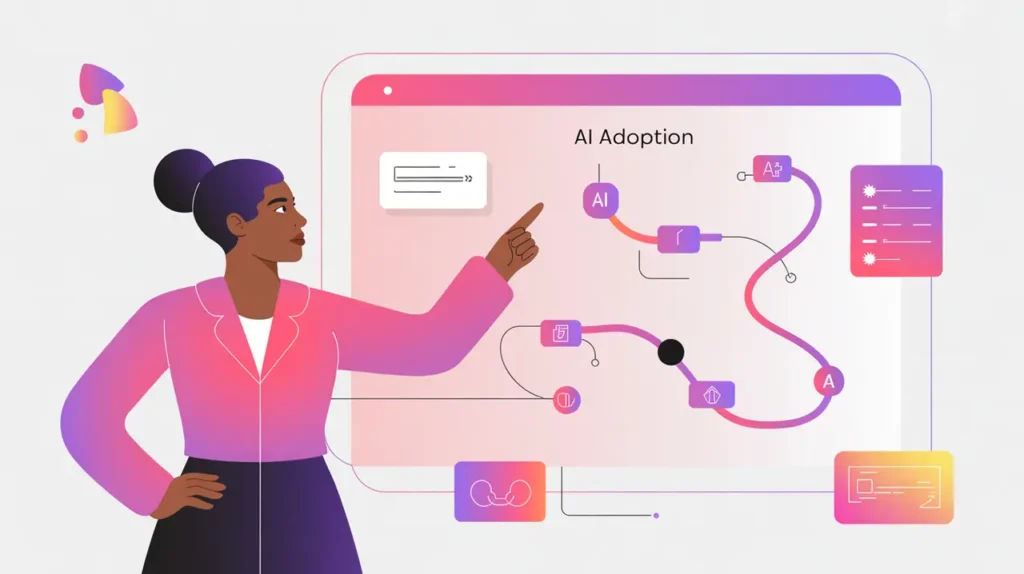
Importance of Digital Literacy for AI
Digital Literacy for AI refers to the skills and understanding individuals need to engage critically and effectively with artificial intelligence systems. It goes beyond basic computer literacy, emphasizing knowledge of how AI works, its strengths and limitations, and its ethical and social implications. Its importance today lies in the fact that AI is shaping decisions in education, health, finance, and governance, and individuals who lack literacy risk exclusion or harm.
For social innovation and international development, digital literacy for AI matters because equitable participation in digital societies requires more than access to technology. It requires the ability to use, question, and shape AI responsibly.
Definition and Key Features
Digital literacy frameworks traditionally cover skills such as information evaluation, digital communication, and online safety. AI literacy expands these to include understanding concepts like algorithms, data bias, and model transparency. UNESCO, OECD, and other bodies are developing AI literacy guidelines to support global education and civic engagement.
It is not the same as advanced AI technical training, which focuses on building models and systems. Nor is it equivalent to generic digital literacy, which may not address the specific ways AI influences decision-making and power. AI literacy bridges the gap between technical systems and everyday life.
How this Works in Practice
In practice, AI literacy might involve teaching students how recommendation algorithms shape their newsfeeds, training teachers to use adaptive learning platforms critically, or equipping health workers to interpret AI diagnostic outputs responsibly. It also includes awareness of ethical issues such as privacy, surveillance, and fairness. Programs often combine conceptual education with hands-on experience using AI tools.
Challenges include wide disparities in education systems, resource constraints in low-income regions, and the difficulty of keeping curricula updated as AI evolves. Building literacy requires collaboration between educators, governments, technologists, and communities.
Implications for Social Innovators
Digital literacy for AI strengthens agency across mission-driven sectors. Health programs benefit when patients and providers understand AI-driven diagnostics and can question results. Education initiatives can prepare students for AI-shaped futures by integrating AI literacy into curricula. Humanitarian agencies can empower communities to engage critically with digital ID or targeting systems. Civil society organizations advocate for AI literacy as a foundation for democratic participation and accountability.
By advancing digital literacy for AI, organizations ensure that individuals are not passive subjects of technology but active participants in shaping its role in society.