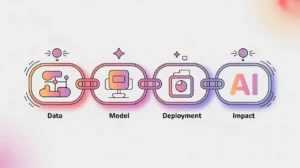
Importance of Lean Experimentation and Pilot to Scale
Lean Experimentation and Pilot to Scale describe approaches that help organizations test ideas quickly, learn from evidence, and scale only those interventions that prove effective. Lean experimentation emphasizes small, low-cost tests to validate assumptions, while pilot-to-scale focuses on transitioning proven pilots into sustainable, larger-scale implementations. Their importance today lies in reducing wasted resources and ensuring that technology-driven initiatives are grounded in real-world effectiveness before being expanded.
For social innovation and international development, these approaches matter because organizations often work with scarce resources and high stakes. Lean methods allow them to take calculated risks while protecting communities from untested, large-scale failures.
Definition and Key Features
Lean experimentation borrows from the Lean Startup methodology, which prioritizes rapid cycles of build-measure-learn. Piloting to scale involves designing pilots with scalability in mind, testing operational models, and refining based on evidence. Both methods require clear hypotheses, measurable indicators, and structured learning processes.
They are not the same as ad hoc trials, which may lack rigor, nor are they equivalent to permanent pilots, which stagnate without pathways to scale. Lean experimentation and pilot-to-scale emphasize intentional testing, evidence-based refinement, and transition to sustainable growth.
How this Works in Practice
In practice, a nonprofit might test an AI chatbot for health advice with a small group before expanding to wider populations. An education initiative may pilot an adaptive learning tool in a handful of schools, using feedback to improve design and implementation. Humanitarian agencies could run lean experiments on new mobile cash-transfer systems, measuring usability and reliability before rolling them out nationally.
Challenges include pilot fatigue (where communities experience repeated short-term tests without long-term benefits), insufficient planning for scale, and resource constraints that make iteration difficult. Designing pilots with clear scaling strategies is key particularly in relation to funding, governance, technical integration.
Implications for Social Innovators
Lean experimentation and pilot-to-scale approaches are highly relevant in mission-driven work. Health programs can experiment with digital diagnostics in controlled environments before rolling out nationally. Education initiatives can refine digital tools in pilot schools before scaling to entire systems. Humanitarian agencies can test logistics models during smaller crises before deploying them in global emergencies. Civil society groups can trial civic tech platforms at the community level before advocating for national adoption.
By combining lean experimentation with structured pathways to scale, organizations balance innovation with responsibility, ensuring technology delivers sustainable impact.