Importance of Volunteer Management and Matching
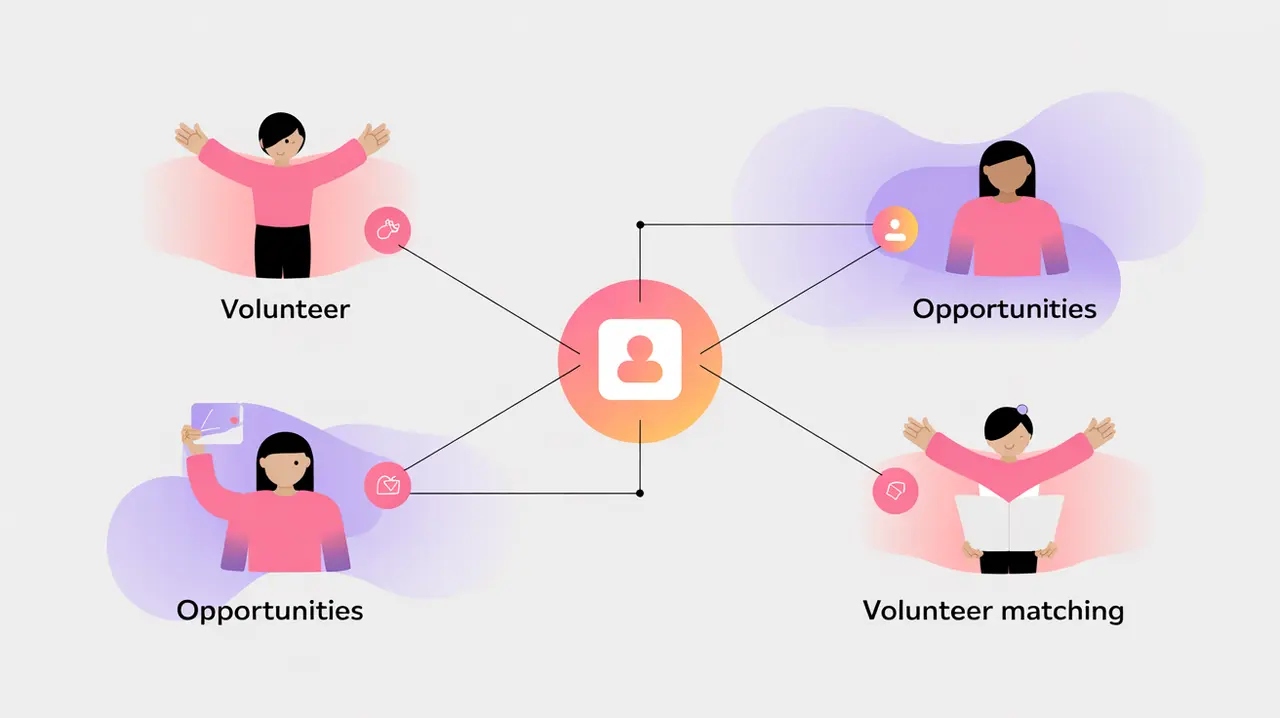
Volunteer Management and Matching systems are tools that help organizations recruit, organize, and deploy volunteers effectively. Matching capabilities use data to align volunteer skills, interests, and availability with organizational needs or community priorities. Their importance today lies in scaling civic participation, ensuring resources are used efficiently, and strengthening relationships between organizations and their volunteer base.
For social innovation and international development, these systems matter because mission-driven organizations often rely heavily on volunteers to extend their reach. Effective management ensures that volunteers are engaged productively while communities receive the right support at the right time.
Definition and Key Features
Volunteer management platforms typically include features such as onboarding workflows, scheduling, skills databases, and communication tools. AI-enhanced matching can analyze volunteer profiles and program needs to recommend placements. Some platforms integrate with CRMs, event management tools, and digital learning systems to provide a unified experience.
They are not the same as simple sign-up forms, which capture interest but lack management capabilities. Nor are they equivalent to HR systems, which focus on paid employees. Volunteer management and matching platforms are designed specifically to manage unpaid contributors in dynamic, community-oriented settings.
How this Works in Practice
In practice, organizations use these systems to track hours served, manage assignments, and send updates or reminders. Matching algorithms can pair volunteers with projects based on language skills, technical expertise, or geographic proximity. For example, during disaster response, volunteers with logistics experience can be prioritized for supply chain tasks, while those with medical training can be matched to clinics.
Challenges include ensuring data accuracy in volunteer profiles, providing equitable opportunities across demographics, and maintaining motivation through recognition and feedback. Smaller organizations may also face adoption hurdles if platforms are too complex or costly.
Implications for Social Innovators
Volunteer management and matching directly strengthen mission-driven work. Health programs can mobilize local volunteers for vaccination campaigns. Education initiatives can connect mentors with students for tutoring or career guidance. Humanitarian agencies can quickly deploy volunteers with specialized skills during emergencies. Civil society groups can sustain grassroots movements by engaging supporters in advocacy campaigns or local projects.
By combining technology with human capacity, volunteer management and matching platforms expand organizational reach, improve responsiveness, and deepen community engagement.