Importance of Retrieval Augmented Generation (RAG)
Retrieval-Augmented Generation (RAG) is an emerging AI technique that combines information retrieval with language generation to produce more accurate and contextually grounded outputs. Its importance today stems from the limitations of large language models, which can generate fluent but incorrect or outdated information. By connecting generation to real-time or domain-specific knowledge sources, RAG improves trustworthiness and reliability.
For social innovation and international development, RAG matters because it offers a way to align AI outputs with verified, local, and mission-relevant data. Instead of relying solely on global training sets that may overlook marginalized perspectives, RAG enables organizations to anchor AI systems in the knowledge that communities already trust and produce.
Definition and Key Features
RAG refers to an approach where a language model is augmented with an external retrieval system, such as a database or search index. When given a query, the system retrieves relevant documents or data and feeds them into the model as context for generating a response. This technique bridges the gap between the creativity of generative models and the accuracy of information retrieval.
It is not simply web search, which returns documents for a user to interpret, nor is it a pure generative model that relies only on pre-trained knowledge. Instead, RAG is a hybrid method that integrates retrieval into the generation process. Its value lies in combining the breadth of external knowledge with the fluency of language models, ensuring outputs are both informative and contextually grounded.
How this Works in Practice
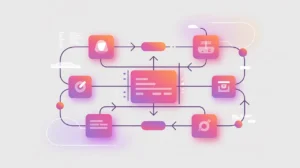
In practice, a RAG system has two components: a retriever and a generator. The retriever identifies relevant documents or data entries from a knowledge base. The generator, often a large language model, uses this retrieved content as context to craft a coherent and accurate answer. This setup reduces hallucinations and allows for domain adaptation without retraining the entire model.
RAG can be implemented using vector databases, which store data as embeddings for efficient similarity search. For example, a query about crop diseases can be linked to an agricultural database, and the model generates an advisory message based on that trusted knowledge. While powerful, RAG systems require careful design of the knowledge base, quality control for retrieved documents, and monitoring to prevent the injection of unreliable sources.
Implications for Social Innovators
For mission-driven organizations, RAG offers a practical way to tailor AI tools to local realities. In healthcare, RAG systems can integrate community health manuals and local treatment guidelines, generating advice that reflects national protocols rather than generic information. In education, they can ground tutoring responses in approved curricula, ensuring alignment with local standards.
Humanitarian agencies are testing RAG to analyze crisis data by connecting language models to field reports, enabling faster synthesis of evolving conditions. Civil society groups use RAG to build advocacy tools that retrieve laws, policies, or budgets, and generate summaries for citizen engagement. Even in agriculture, RAG can link farmer queries to local extension service knowledge, providing accurate advice in real time. RAG’s role in reducing information asymmetry ensures that generative AI systems are fluent as well as grounded, reliable, and relevant to the communities they serve.