Importance of Deep Learning
Deep Learning (DL) is a specialized branch of Machine Learning that has surged to prominence because of its ability to handle massive datasets and complex tasks. It powers much of the recent progress in AI, from voice recognition to image classification and generative systems like chatbots. Its relevance today stems from the convergence of three factors: large amounts of data, powerful computing infrastructure, and advanced neural network architectures. Together, these have enabled breakthroughs that were previously unimaginable.
For social innovation and international development, DL matters because it enables mission-driven organizations to leapfrog resource constraints. By automating tasks that once required expert human judgment, DL expands access to advanced tools in health, education, agriculture, and humanitarian response. The challenge is to harness these capabilities responsibly, ensuring they do not widen digital divides or introduce opaque decision-making into critical public systems.
Definition and Key Features
Deep Learning refers to the use of multi-layered artificial neural networks that can automatically discover representations and patterns in data. Inspired by the structure of the human brain, these networks consist of layers of interconnected “neurons” that process information hierarchically. The field gained traction in the 1980s and 1990s but was limited by insufficient computing power and small datasets. Its modern resurgence began in the 2010s, when advances in GPUs and large-scale data enabled models to achieve superhuman performance in domains like image recognition.
DL is not interchangeable with ML as a whole; it is a subset characterized by deep neural architectures that can capture complex, nonlinear relationships. Nor is it equivalent to simple automation, which follows preset instructions. Instead, DL thrives where vast amounts of unstructured data (images, audio, text) require layered abstraction to make sense. This makes it distinct from earlier approaches, which often relied heavily on manual feature engineering.
How this Works in Practice
In practice, Deep Learning works by passing inputs (such as pixels from an image or words from a sentence) through multiple hidden layers of a neural network. Each layer extracts increasingly abstract features: edges and shapes in early layers, object parts in middle layers, and full objects in later layers. Training such models involves adjusting millions, or even billions, of parameters through optimization methods like backpropagation and gradient descent.
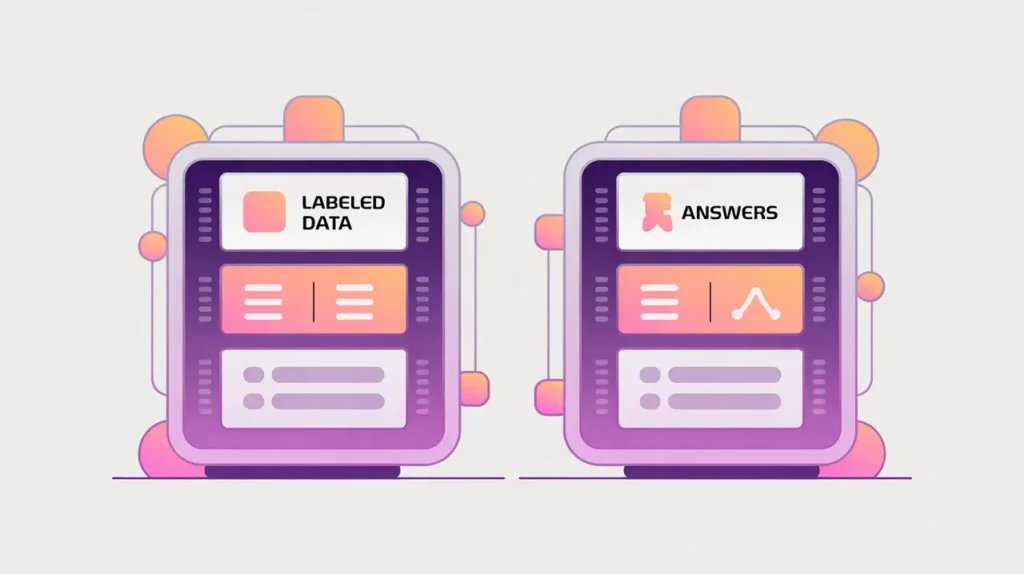
Popular architectures include Convolutional Neural Networks (CNNs) for images, Recurrent Neural Networks (RNNs) for sequences, and Transformers for text and multimodal data. These models require enormous amounts of labeled data and computing resources, which can be a barrier to adoption. Yet their flexibility is unmatched: the same underlying approach can generate realistic images, translate between languages, or detect disease in medical scans. Despite their power, DL models are often criticized for being “black boxes,” making their internal reasoning difficult to interpret. This opacity raises questions of trust, fairness, and accountability in sensitive applications.
Implications for Social Innovators
Deep Learning has opened new frontiers for social innovation and development. In healthcare, DL models analyze chest X-rays to detect tuberculosis in low-resource clinics where radiologists are scarce. In agriculture, DL-powered smartphone apps identify crop diseases from photos, giving smallholder farmers immediate guidance. For disaster response, DL is used to analyze drone and satellite imagery, mapping areas affected by floods or earthquakes within hours rather than days.
In education, DL underpins adaptive learning platforms that personalize exercises for students by analyzing their responses in real time. Human rights organizations apply DL to scan millions of online images and videos, identifying evidence of violence or environmental destruction. These applications show DL’s potential to overcome capacity shortages and extend expertise into underserved areas. However, the resource intensity of DL (large datasets, high energy consumption, and dependence on advanced hardware) poses challenges for equitable deployment. Mission-driven actors must weigh these costs against the benefits and prioritize transparency to build trust with the communities they serve.