Importance of Construction
Construction is essential for building the infrastructure, housing, and facilities that enable societies to function and grow. It underpins economic development by creating jobs, stimulating supply chains, and supporting industries ranging from transport to energy. In international development, construction plays a central role in addressing urbanization, delivering social services, and building resilience against climate and disaster risks. For nonprofits and social innovators, construction matters because it directly affects access to safe housing, schools, hospitals, and community facilities. Its importance lies in turning resources and planning into physical structures that support human wellbeing.
Definition and Features
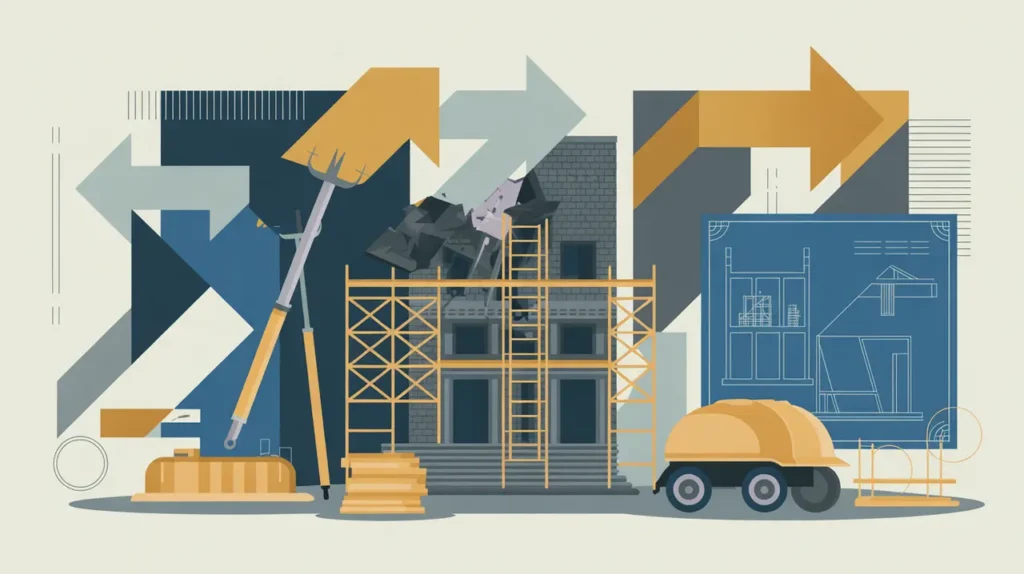
Construction refers to the process of designing, planning, and building physical structures such as buildings, roads, and infrastructure systems. Its defining features include:
- Infrastructure Development: creation of essential systems like roads, bridges, and utilities.
- Building Provision: residential, commercial, and public facilities.
- Economic Contribution: large employer and driver of related industries.
- Safety and Standards: regulated by codes to ensure structural integrity and resilience.
How this Works in Practice
In practice, construction projects are carried out by contractors, engineers, architects, and laborers under public, private, or community leadership. For example, governments may fund the construction of schools or health clinics, while private firms develop housing and commercial buildings. NGOs often support low-cost housing and disaster-resilient construction in vulnerable areas. Challenges include high costs, corruption, safety risks, environmental impacts, and inequitable access to quality construction in low-income settings.
Implications for Social Innovation
Construction has significant implications for social innovation because it shapes the spaces where people live, work, and connect. Innovations such as green building technologies, modular housing, and community-driven construction models improve affordability, sustainability, and inclusion. For proximate actors, equitable and resilient construction provides security, dignity, and opportunity. Construction is essential for sustainable development and community wellbeing.