Importance of Human in the Loop Labeling
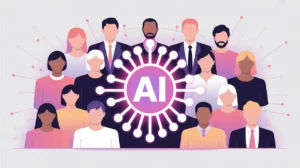
Human in the Loop (HITL) Labeling is the process of involving people directly in the annotation and validation of data for machine learning systems. Instead of relying solely on automated tools, humans provide oversight, corrections, and contextual judgments that algorithms cannot fully replicate. Its importance today lies in improving the quality, fairness, and cultural relevance of datasets that underpin AI applications.
For social innovation and international development, HITL labeling matters because many communities have unique languages, contexts, and norms that cannot be accurately captured by automated systems alone. Human oversight ensures AI reflects diverse realities, reducing bias and improving outcomes for underserved populations.
Definition and Key Features
HITL labeling typically combines automated pre-labeling (such as model-generated annotations) with human review and correction. Humans are particularly valuable in complex tasks such as identifying nuanced emotions in text, recognizing objects in low-quality images, or verifying sensitive medical data. The human input improves accuracy and provides training signals that help models learn better over time.
It is not the same as fully manual labeling, which is time-intensive and less scalable. Nor is it equivalent to unsupervised approaches, where data patterns are discovered without labels. HITL is a hybrid model, balancing the scalability of automation with the contextual intelligence of human judgment.
How this Works in Practice
In practice, HITL labeling is often managed through annotation platforms that integrate machine assistance and human workflows. For example, an AI might auto-label a dataset of satellite images, and humans verify whether houses, roads, or farmland are correctly identified. This combination speeds up the process while preserving quality. Crowdsourcing and professional annotation firms are common sources of labor, though questions of fairness, worker rights, and compensation remain pressing.
Challenges include cost, scalability, and ensuring annotators have adequate cultural and contextual knowledge. If workers lack context or training, they may introduce new biases. On the other hand, too much reliance on automation risks missing subtle but important distinctions. Effective HITL approaches require thoughtful task design, ethical labor practices, and continuous quality checks.
Implications for Social Innovators
Human in the Loop labeling is especially valuable for mission-driven organizations. Health programs can use trained annotators to validate medical images for rare conditions where accuracy is critical. Education initiatives can rely on teachers or local experts to label culturally specific learning data, ensuring relevance for students. Humanitarian agencies can use HITL workflows to validate crisis-mapping data, improving the accuracy of on-the-ground information.
By combining automation with human oversight, HITL labeling ensures AI systems are both scalable and sensitive to the diverse realities of the communities they serve.