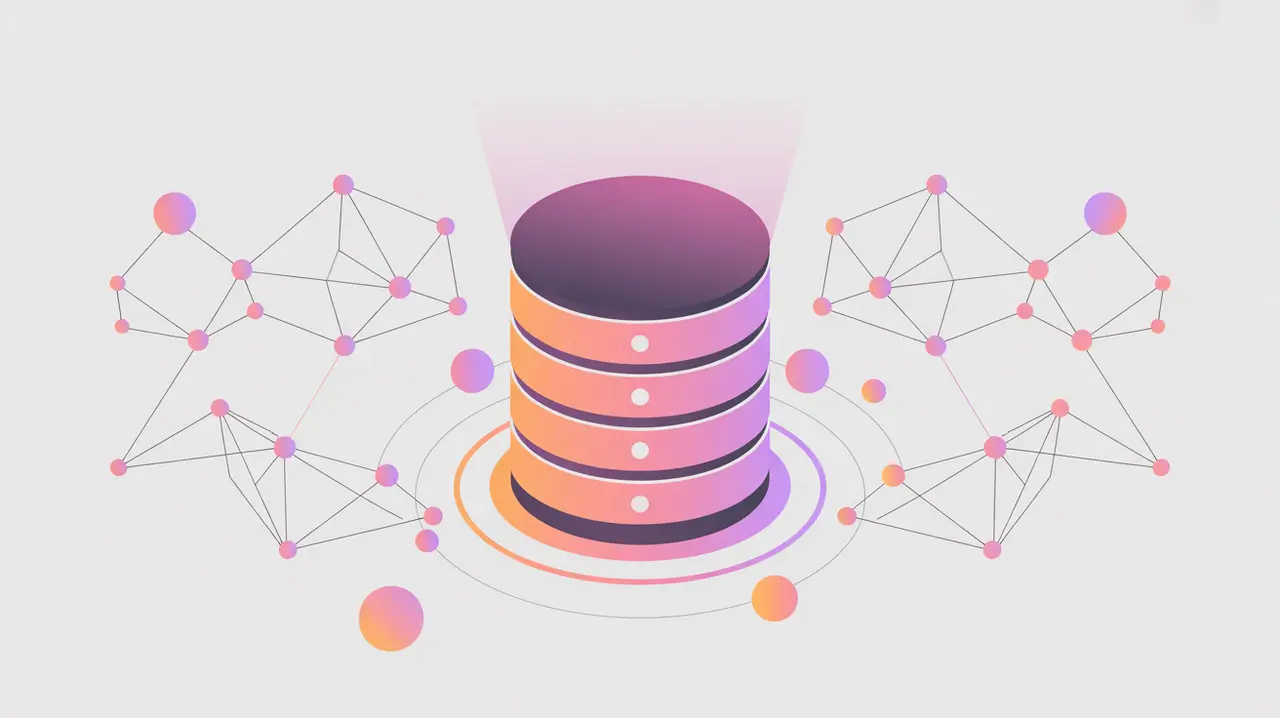
Importance of Vector Databases
Vector Databases are specialized systems designed to store and search high-dimensional vectors, which are mathematical representations of data such as text, images, audio, or video. These databases enable similarity search, allowing AI systems to find items that are semantically close rather than just exact matches. Their importance today lies in powering applications like semantic search, recommendation engines, and retrieval-augmented generation (RAG), which are central to modern AI.
For social innovation and international development, vector databases matter because they allow mission-driven organizations to make sense of large, unstructured datasets. From educational content to health records and humanitarian data, vector databases help surface relevant information quickly and in context.
Definition and Key Features
Vector databases work by storing embeddings, which are numerical vectors generated by AI models to capture meaning or features. They use indexing techniques such as HNSW (Hierarchical Navigable Small World graphs) or IVF (Inverted File Indexes) to efficiently search across millions or billions of vectors. Popular tools include Pinecone, Weaviate, Milvus, and Vespa.
They are not the same as relational databases, which manage structured data in rows and tables. Nor are they equivalent to document stores, which organize semi-structured data like JSON. Vector databases are purpose-built for similarity search and unstructured data management.
How this Works in Practice
In practice, vector databases support applications where finding “close enough” results is more useful than finding exact matches. For example, a query about “tuberculosis diagnosis” can retrieve semantically similar documents, even if the keywords differ. They also underpin RAG pipelines, where vector search retrieves relevant context that improves the accuracy of large language model responses. Scalability and latency are key considerations, as searches must remain fast across large datasets.
Challenges include managing costs for storage and compute, ensuring embeddings capture meaningful patterns without bias, and integrating vector search into broader workflows. As models evolve, embeddings may need to be regenerated, raising questions of consistency and governance.
Implications for Social Innovators
Vector databases unlock practical AI applications for mission-driven organizations. Health systems can use them to power medical knowledge search across global datasets. Education platforms can create personalized learning pathways by retrieving semantically similar content for students. Humanitarian agencies can deploy vector search to analyze satellite imagery, reports, and communications during crises. Civil society groups can use them to organize and retrieve advocacy materials more effectively.
By enabling semantic search and contextual retrieval, vector databases make unstructured data actionable, helping organizations deliver faster, smarter, and more relevant solutions.