Importance of GPU and TPU Acceleration
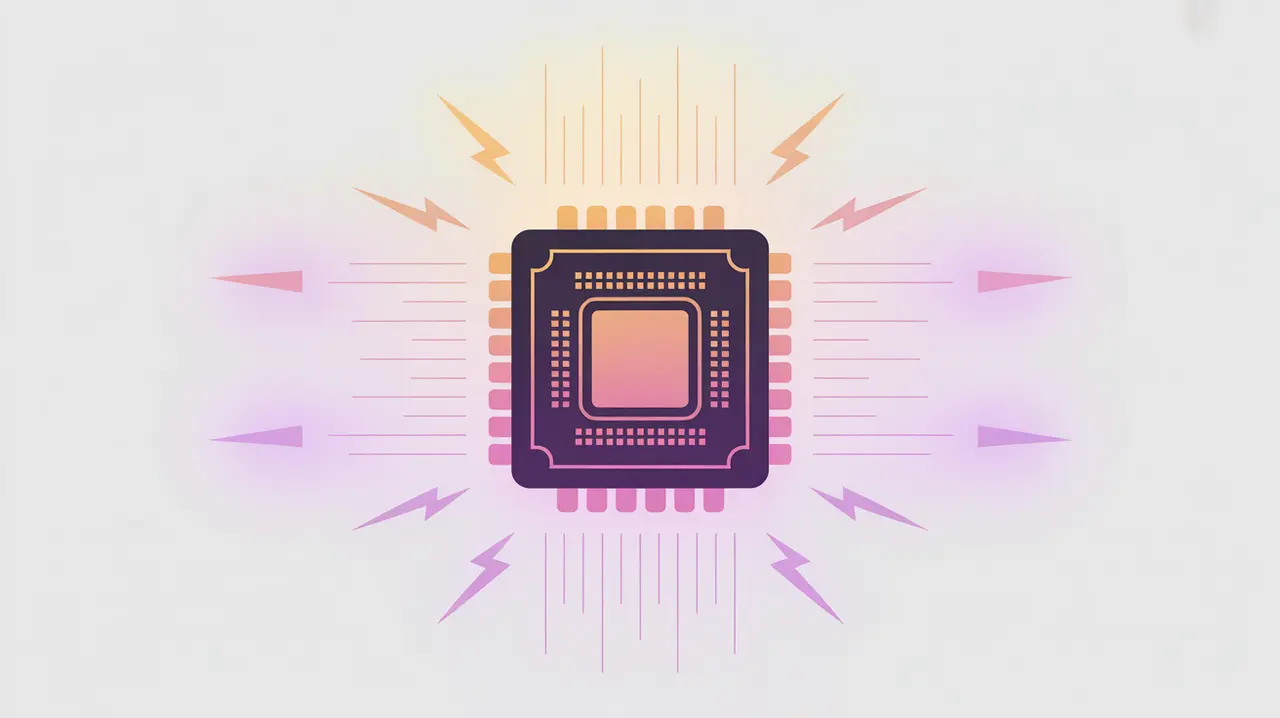
GPU and TPU acceleration refers to the use of specialized hardware, such as Graphics Processing Units (GPUs) and Tensor Processing Units (TPUs, to speed up the training and inference of Artificial Intelligence models. Their importance today lies in the sheer computational demands of modern AI. Training large models can take weeks or months on standard processors, while GPUs and TPUs cut this time drastically, making cutting-edge research and deployment possible.
For social innovation and international development, hardware acceleration matters because it lowers barriers to access. By reducing the cost and time required to train or run models, GPUs and TPUs make it more feasible for organizations with limited resources to adopt AI. As cloud providers make this hardware available on-demand, it opens the door for mission-driven actors to scale tools that were once confined to elite labs.
Definition and Key Features
GPUs were originally designed for rendering graphics, but their parallel processing capabilities make them well-suited to matrix operations central to AI. TPUs, developed by Google, are custom-built processors optimized for deep learning workloads, offering even greater efficiency for certain tasks. Both are now integral to machine learning infrastructure, powering everything from academic research to commercial deployments.
They are not the same as CPUs (Central Processing Units), which handle general-purpose computing tasks but struggle with the massive parallelism required for deep learning. Nor are GPUs and TPUs interchangeable: GPUs are widely available and versatile, while TPUs are highly specialized and primarily offered through Google’s cloud ecosystem.
How this Works in Practice
In practice, GPUs and TPUs accelerate the mathematical operations that underlie model training and inference. A single GPU can process thousands of calculations simultaneously, making it possible to train models on massive datasets. TPUs take this further by incorporating optimized architectures for tensor operations, often achieving greater throughput at lower power consumption.
Challenges include cost, availability, and energy consumption. While cloud platforms offer pay-as-you-go access, organizations in low-resource settings may face connectivity issues or high costs. Efficient use of GPUs and TPUs also requires technical expertise to configure software frameworks like TensorFlow or PyTorch for hardware acceleration.
Implications for Social Innovators
GPU and TPU acceleration directly benefits mission-driven organizations by making advanced AI more accessible. Health initiatives can fine-tune diagnostic models on local datasets without prohibitive delays. Education platforms can run adaptive learning systems in near real time. Humanitarian agencies can process satellite imagery or crisis data quickly enough to guide immediate response.
By speeding up computation, GPUs and TPUs give organizations the ability to experiment, deploy, and scale AI solutions that would otherwise remain out of reach.