
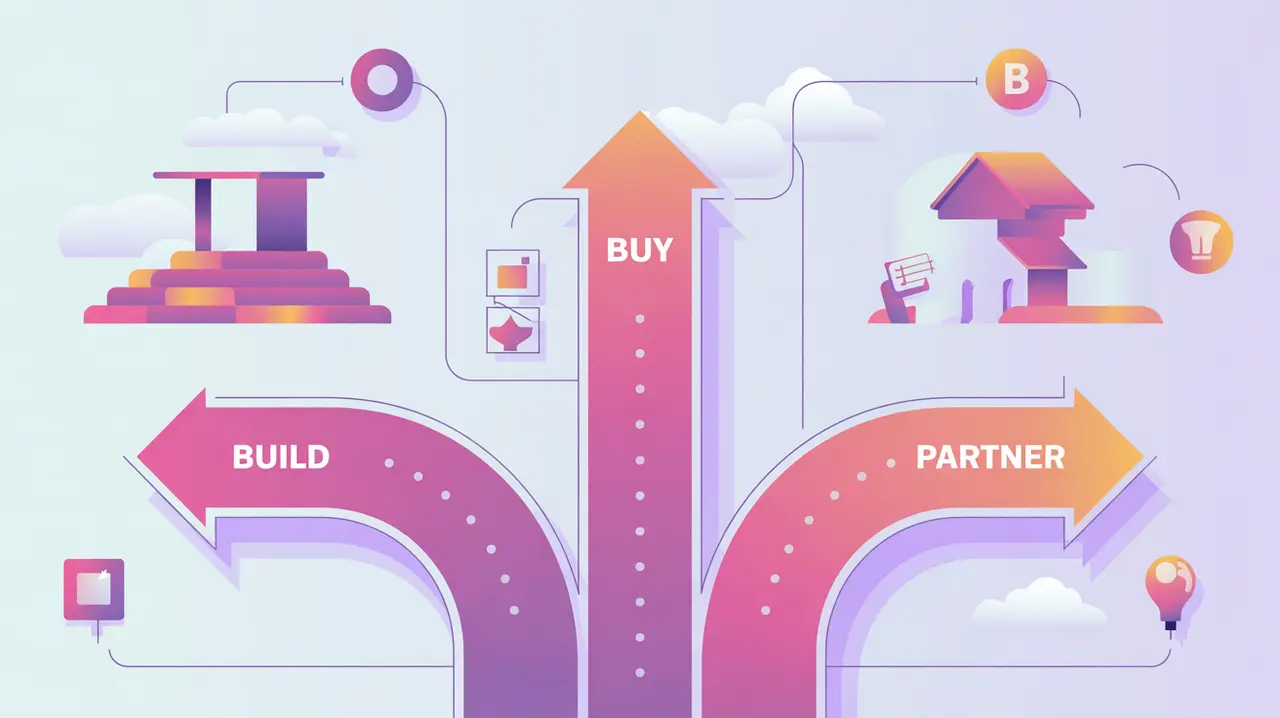
Importance of Build vs Buy vs Partner Decisions
Build vs Buy vs Partner Decisions refer to the strategic choices organizations make when adopting digital or AI solutions. Building involves developing tools in-house, buying means purchasing off-the-shelf products, and partnering entails collaborating with external actors to co-develop or share solutions. Their importance today lies in the expanding marketplace of AI tools and platforms, where organizations must weigh costs, risks, and alignment with mission before choosing a path.
For social innovation and international development, these decisions matter because mission-driven organizations often have limited budgets and specialized needs. Choosing wisely can make the difference between sustainable impact and wasted resources.
Definition and Key Features
Each option carries trade-offs. Building offers customization and control but requires significant technical expertise and investment. Buying provides speed and proven functionality but may involve rigid licensing or vendor lock-in. Partnering spreads costs and risk, enabling co-creation, but requires careful governance and alignment of values.
This is not the same as procurement processes alone, which focus on transactions. Nor is it equivalent to open-source adoption, which may span all three strategies. Build vs buy vs partner is a strategic decision framework for aligning technology adoption with organizational needs and context.
How this Works in Practice
In practice, a health NGO may build its own patient-tracking app to reflect unique workflows, buy a commercial telemedicine platform for speed, and partner with a local university to co-develop AI diagnostics. Education programs might buy adaptive learning software but build localized content and partner with governments for deployment. Humanitarian agencies often partner with private firms to design logistics systems that can scale in emergencies.
Challenges include underestimating total costs of building, over-relying on external vendors, or entering partnerships without clear agreements on data ownership and sustainability. Effective decision-making requires assessing capacity, mission alignment, and long-term implications.
Implications for Social Innovators
Build vs buy vs partner decisions directly shape mission-driven work. Health initiatives must choose how best to integrate AI into clinical workflows without overburdening staff. Education programs must weigh whether to purchase existing learning platforms or co-create solutions with teachers and local developers. Humanitarian agencies must evaluate whether to partner with private firms for crisis tech while safeguarding community rights. Civil society groups often advocate for partnerships that prioritize transparency, equity, and accountability.
By making intentional build, buy, or partner decisions, organizations ensure their technology strategies remain sustainable, cost-effective, and aligned with mission-driven goals.


