Importance of Transfer Learning
Transfer Learning is a machine learning technique that has become increasingly important in today’s AI landscape because it allows models trained on one task to be adapted for another. Instead of starting from scratch, Transfer Learning reuses knowledge from existing models, reducing the need for massive datasets and high computational costs. This approach has fueled rapid progress in areas like natural language processing and computer vision, where pre-trained models can be fine-tuned for specialized applications.
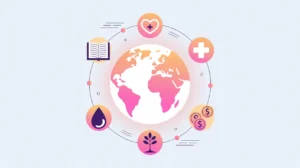
For social innovation and international development, Transfer Learning is especially significant because it lowers the barriers to entry. Communities and organizations often lack the resources to collect extensive local datasets, yet they face urgent challenges that require AI-driven solutions. By adapting global models to local contexts, Transfer Learning makes advanced AI more accessible and relevant to diverse settings.
Definition and Key Features
Transfer Learning refers to the process of taking a model trained on a large, general dataset and fine-tuning it for a different but related task. For example, a model trained on millions of generic images can be adapted to recognize crop diseases from field photos. The origins of Transfer Learning lie in the recognition that knowledge acquired in one domain can improve performance in another, mirroring how humans apply prior experience to new problems.
It is not equivalent to training a model from scratch, which requires extensive labeled data and computing resources. Nor is it a one-size-fits-all solution, since the relevance of the transferred knowledge depends on how closely related the tasks are. Transfer Learning is most effective when the base and target tasks share underlying structures, such as patterns in language, images, or time series data.
How this Works in Practice
In practice, Transfer Learning works by reusing the early layers of a pre-trained model, which capture general features, and fine-tuning later layers to adapt to a specific task. For example, in computer vision, early layers detect edges and shapes, while later layers specialize in identifying objects. By keeping the general layers fixed and training only the specialized ones, organizations save time and resources.
Popular frameworks like BERT in natural language processing or ResNet in computer vision are often used as base models. Fine-tuning these models with smaller, domain-specific datasets produces high-performing systems without the prohibitive cost of training from scratch. This approach democratizes access to AI because it allows mission-driven actors with limited resources to benefit from advances made by larger institutions. However, the technique also carries risks: biases embedded in the original training data can be carried over into adapted models, requiring careful evaluation and contextual validation.
Implications for Social Innovators
Transfer Learning is particularly powerful in resource-constrained environments where labeled data is scarce. In healthcare, global models trained on large datasets of medical images can be fine-tuned to detect conditions prevalent in local populations, such as malaria or tuberculosis. In agriculture, pre-trained vision models can be adapted to identify crop diseases in specific regions using only a small set of local examples.
Education initiatives use Transfer Learning to adapt language models for regional dialects, improving literacy tools in underserved communities. Humanitarian organizations fine-tune NLP systems to process feedback in local languages, ensuring that beneficiary voices are captured accurately. These applications highlight how Transfer Learning reduces the data and cost barriers that often prevent mission-driven organizations from leveraging AI. By allowing global knowledge to be localized, it bridges the gap between cutting-edge innovation and practical impact in diverse contexts.