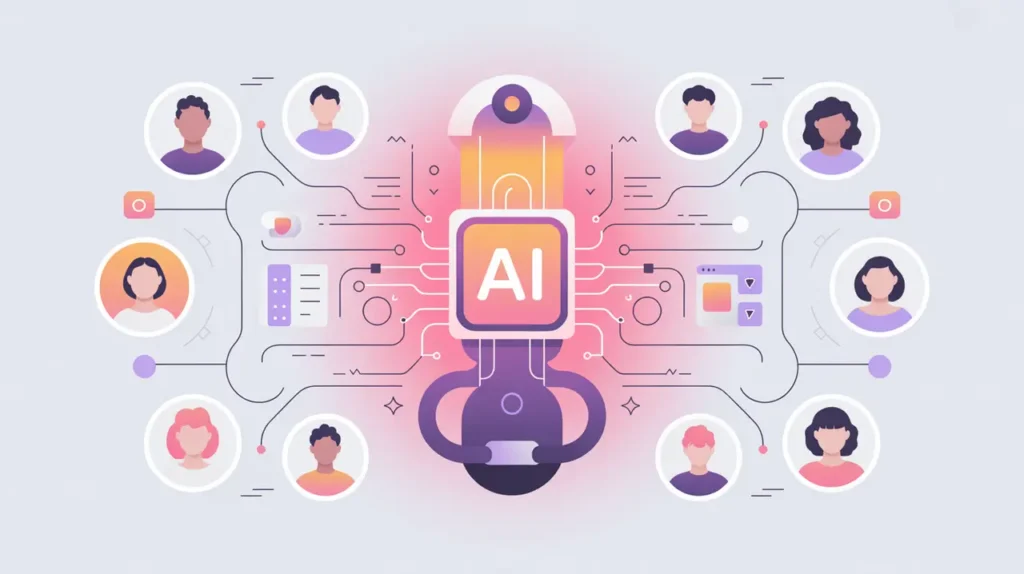
Importance of Participatory Design and Co Creation
Participatory Design and Co-Creation are approaches that directly involve end-users and stakeholders in shaping technologies, programs, and systems. Rather than treating people as passive recipients, they position communities as active partners throughout the design process. Their importance today lies in addressing the shortcomings of top-down technology deployment, where solutions may be misaligned with local realities or even harmful.
For social innovation and international development, participatory design and co-creation matter because they ensure AI and digital tools reflect the lived experiences, values, and priorities of the communities they aim to serve. This strengthens trust, equity, and sustainability of impact.
Definition and Key Features
Participatory design emerged in the 1970s in Scandinavia as a democratic approach to workplace technology design. Co-creation expands the idea, emphasizing collaboration across multiple stakeholders, including communities, practitioners, funders, and developers. Applied to AI, these methods involve shared decision-making on problem framing, data collection, design, testing, and evaluation.
They are not the same as user-centered design, which focuses on usability but may still leave control in the hands of experts. Nor are they equivalent to consultation, which gathers input without guaranteeing influence. Participatory design and co-creation require shared ownership and agency.
How this Works in Practice
In practice, participatory design may involve workshops with community members to define problems, iterative testing of prototypes in real-world contexts, and governance structures that embed community oversight. Co-creation might bring together NGOs, local governments, and technology providers to collaboratively design an education platform or health intervention.
Challenges include power imbalances between stakeholders, resource constraints, and the risk of tokenism if participation is symbolic rather than substantive. Effective participatory approaches require trust-building, time, and willingness to share authority.
Implications for Social Innovators
Participatory design and co-creation strengthen mission-driven initiatives. Health programs can involve patients and frontline workers in shaping AI diagnostic tools to ensure cultural relevance. Education initiatives can co-create digital platforms with teachers, students, and parents to reflect diverse needs. Humanitarian agencies can design aid distribution systems with displaced communities, ensuring dignity and fairness. Civil society groups often promote co-creation as a way to democratize technology development.
By embedding participatory design and co-creation into AI and digital practices, organizations move beyond “designing for” to “designing with,” ensuring solutions are inclusive, trusted, and impactful.