Importance of Embeddings
Embeddings are a foundational concept in Artificial Intelligence, used to represent complex data such as words, images, or sounds as numerical vectors in a shared space. Their importance today lies in their ability to capture relationships and similarities between concepts, making it possible for machines to work with unstructured information more effectively. Embeddings are the connective tissue of modern AI, powering search, recommendation, classification, and reasoning systems.
For social innovation and international development, embeddings matter because they enable AI to link diverse information sources and make them useful for decision-making. They help organizations organize large amounts of knowledge, identify hidden patterns, and create bridges across languages, cultures, and contexts. Without embeddings, many of the most practical AI applications for mission-driven organizations would not be possible.
Definition and Key Features
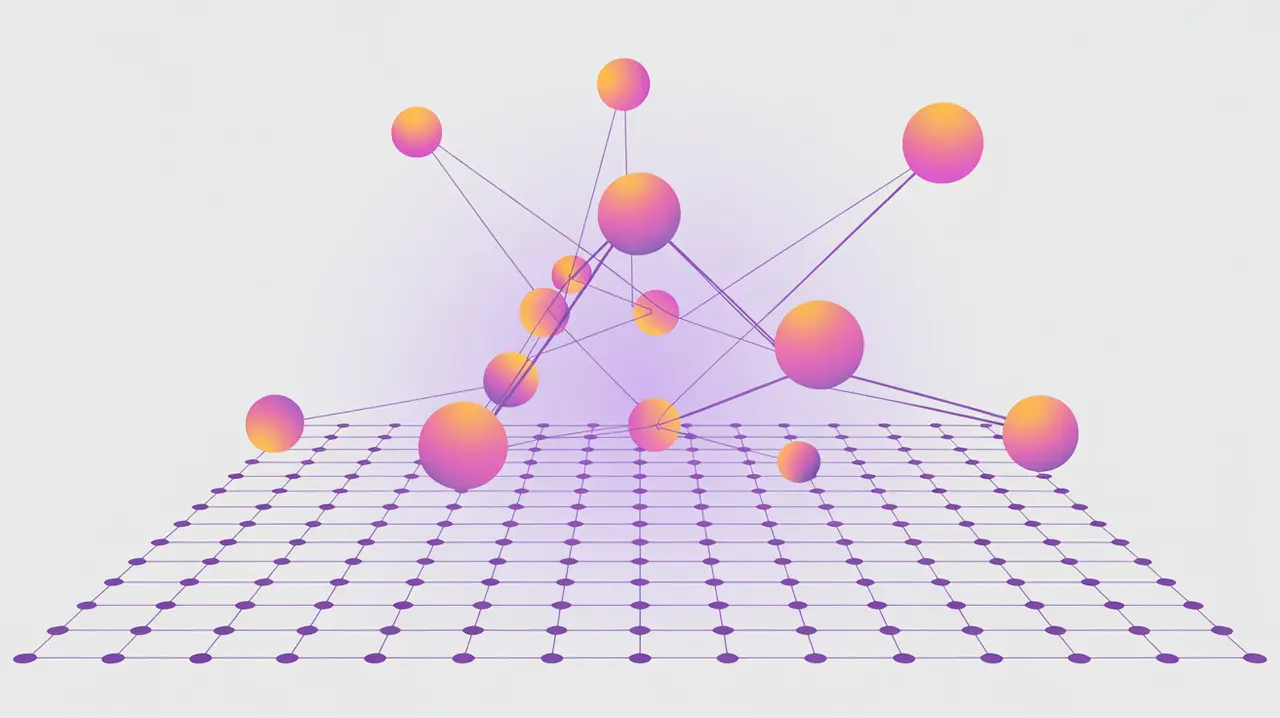
An embedding is a numerical representation of an object, such as a word, sentence, image, or document, mapped into a high-dimensional vector space. In this space, similar objects are located close together, while dissimilar objects are farther apart. Early examples include Word2Vec and GloVe, which mapped words into vectors that reflected semantic relationships, such as placing “king” near “queen” and “doctor” near “nurse.”
Embeddings are not the same as simple codes or identifiers. They do more than label objects; they encode relationships and patterns based on training data. They are also distinct from traditional keyword-based systems, which rely on exact matches. By capturing meaning in mathematical form, embeddings allow AI systems to perform tasks like semantic search, clustering, and recommendation with much greater sophistication.
How this Works in Practice
In practice, embeddings are created by training neural networks on large datasets, learning to represent objects in a way that preserves their contextual relationships. For language, embeddings capture how words are used in sentences, enabling models to recognize synonyms, analogies, or nuanced differences. For images, embeddings capture visual features such as shapes or textures. These representations can be compared using distance metrics, making it possible to measure similarity between different inputs.
Embeddings underpin many AI applications. Vector databases use embeddings to store and retrieve information based on meaning rather than exact matches. Recommendation systems use embeddings to suggest items similar to those a user has engaged with. Multimodal models rely on embeddings to align text, images, and audio in the same representational space. The interpretability of embeddings is limited, however, since they condense meaning into abstract mathematical structures that humans cannot directly read.
Implications for Social Innovators
Embeddings have concrete uses in social innovation and development. In education, embeddings power adaptive learning platforms that match students with exercises based on similarity to past performance. In health, embeddings support the analysis of patient records and clinical notes, enabling systems to group related cases and suggest treatments.
Humanitarian organizations use embeddings to build semantic search tools that help field workers retrieve relevant documents from vast knowledge repositories. In agriculture, embeddings enable advisory systems to connect farmer questions with similar past cases, even when phrased in different dialects. Civil society groups apply embeddings to analyze large sets of policy documents, clustering them by themes to support advocacy. Embeddings thus transform raw data into connected insights, making knowledge systems more accessible, adaptable, and relevant for mission-driven work.