Importance of Capability Maturity Models
Capability Maturity Models (CMMs) are structured frameworks used to evaluate and improve an organization’s ability to manage processes, technologies, and systems. They provide staged levels of maturity, from ad hoc or reactive practices to optimized, sustainable ones. Their importance today lies in guiding organizations through systematic improvement as they adopt digital and AI tools, ensuring growth is intentional and measured rather than chaotic.
For social innovation and international development, capability maturity models matter because mission-driven organizations often operate with limited resources. CMMs help them prioritize investments, benchmark progress, and strengthen accountability in ways that align technology adoption with mission outcomes.
Definition and Key Features
The concept originated with the Capability Maturity Model developed by Carnegie Mellon University for software engineering in the 1980s. Since then, maturity models have been adapted for areas like cybersecurity, project management, and AI. They typically consist of five levels: Initial, Repeatable, Defined, Managed, and Optimizing, each describing greater process sophistication and integration.
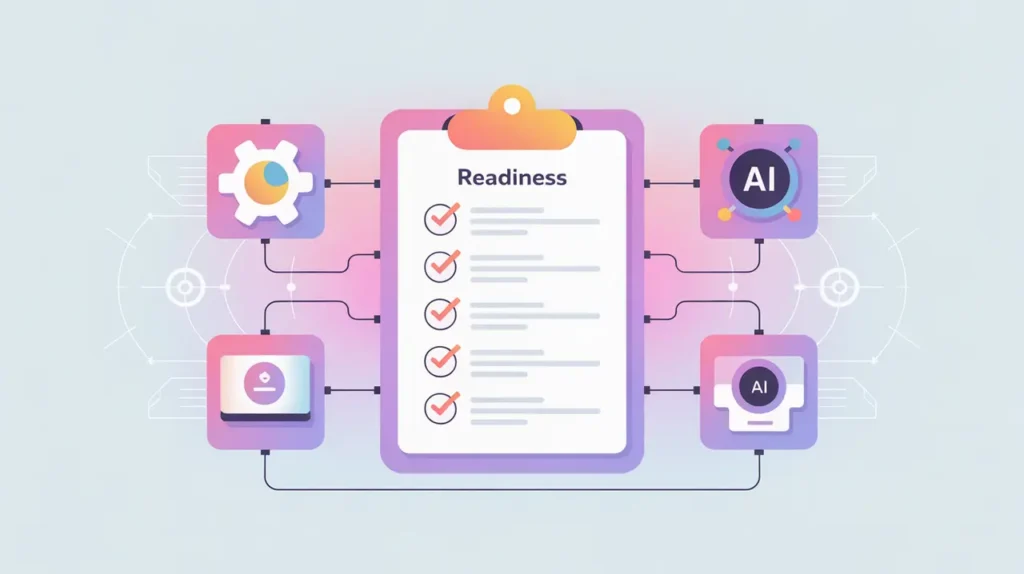
They are not the same as readiness frameworks, which assess whether conditions for adoption exist. Nor are they equivalent to performance metrics, which measure outcomes without capturing the maturity of underlying systems. Maturity models emphasize staged growth and institutionalization of practices.
How this Works in Practice
In practice, a nonprofit might use an AI capability maturity model to assess its data governance. At the “Initial” stage, data may be siloed and inconsistent. At “Managed,” the organization has clear policies, staff training, and monitoring. At “Optimizing,” continuous learning and improvement guide responsible AI use. Maturity models also help organizations identify realistic next steps rather than aiming prematurely for full optimization.
Challenges include adapting models to fit the scale of smaller organizations, avoiding rigid interpretations that stifle flexibility, and ensuring that maturity is not pursued as an end in itself but in service of mission goals.
Implications for Social Innovators
Capability maturity models support structured growth across mission-driven sectors. Health programs can use them to benchmark clinical AI deployment practices. Education initiatives can assess maturity in digital learning environments, from early experimentation to integrated systems. Humanitarian agencies can evaluate their operational maturity in using predictive analytics for crisis response. Civil society groups can use maturity models to advocate for transparency and accountability in AI adoption.
By applying capability maturity models, organizations can align technological growth with their values, ensuring steady, accountable, and mission-focused progress.