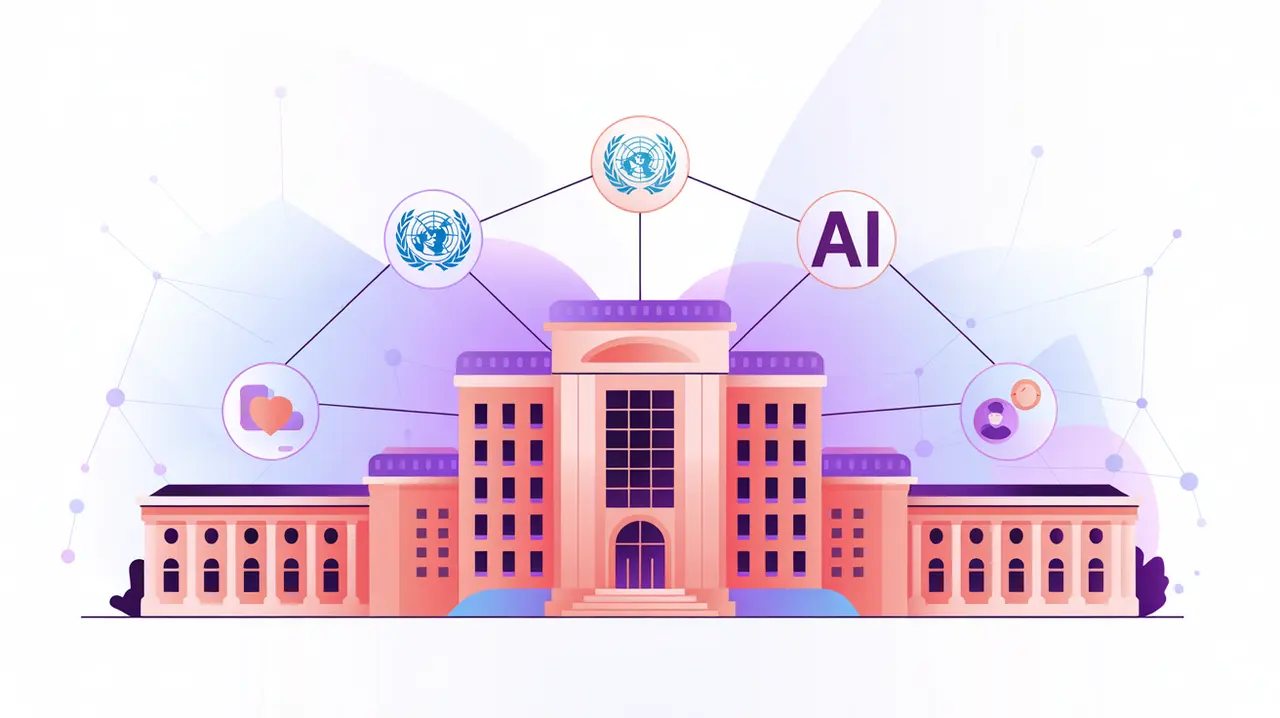
Importance of Bilateral & Multilateral Institutions in AI Governance
Bilateral and multilateral institutions are increasingly central to shaping how artificial intelligence is governed globally. Institutions, ranging from development agencies to intergovernmental organizations like the UN, World Bank, or OECD, set norms, provide financing, and coordinate cross-border collaboration. Their importance today lies in the recognition that AI transcends national boundaries, creating challenges and opportunities that require international cooperation.
For social innovation and international development, these institutions matter because they provide the frameworks, resources, and legitimacy needed to ensure AI adoption advances equity, rights, and sustainable development goals.
Definition and Key Features
Bilateral institutions typically involve agreements between two governments, often through aid or development agencies, while multilateral institutions include larger global bodies. In the AI context, they contribute by creating ethical guidelines, harmonizing regulatory standards, funding research, and facilitating dialogue between governments, private sector, and civil society.
This is not the same as national government regulation, which operates within country-specific laws. Nor is it equivalent to private standard-setting bodies, which focus on industry norms. Bilateral and multilateral institutions function at the diplomatic and cooperative level, building consensus and accountability across borders.
How this Works in Practice
In practice, these institutions may fund AI-driven agriculture programs across regions, create cross-border frameworks for data sharing, or issue global guidance on AI ethics. For example, the OECD’s AI Principles have informed policy in dozens of countries, while UN agencies are piloting AI systems for humanitarian and development purposes.
Challenges include slow consensus-building, uneven representation of low- and middle-income countries, and risks of “AI colonialism” if governance is dominated by wealthier states. Balancing global norms with local context remains an ongoing struggle.
Implications for Social Innovators
Bilateral and multilateral institutions directly shape mission-driven ecosystems. Health initiatives rely on WHO-led frameworks for AI in diagnostics and data sharing. Education programs benefit from multilateral funding for digital learning platforms. Humanitarian agencies coordinate through global bodies that set ethical standards for AI in crisis contexts. Civil society engages these institutions to advocate for equity, accountability, and representation.
By fostering cooperation, bilateral and multilateral institutions in AI governance ensure that technological progress serves global public goods, not just national or corporate interests.