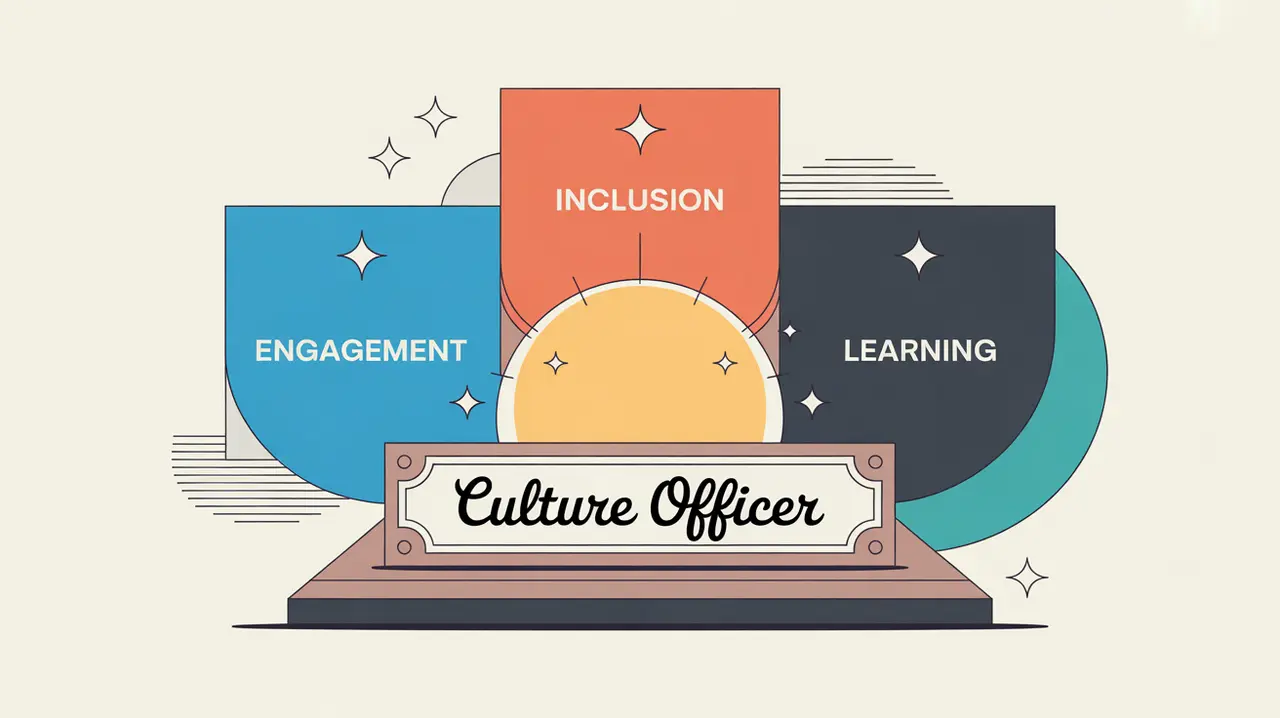
What Does the Culture Officer Role Involve?
A culture officer helps guide, implement, and sustain initiatives that shape the organization’s internal culture and align it with its mission and values. This involves supporting strategy execution, managing employee engagement programs, facilitating cultural activities, advising managers on culture-related issues, and ensuring that values are embedded in daily operations. The role typically sits within human resources, people and culture, or organizational development functions depending on the organization’s structure. In both nonprofits and social enterprises, culture officers play a key role in translating cultural vision into daily practice, ensuring that staff feel connected, supported, and aligned with organizational goals.
At What Level does this Role Operate?
Mid Level: This role typically reports to a culture lead, director of people and culture, or HR manager. It involves working with moderate autonomy to coordinate cultural initiatives, support leadership engagement strategies, and advise teams on fostering healthy workplace dynamics.
Relative Employability: Culture officer roles are increasingly available across nonprofits, social enterprises, and mission-driven organizations as more institutions prioritize employee engagement and values alignment. Professionals who can bridge strategy and implementation in the cultural domain are in growing demand.
Relative Pay Scale: Within nonprofits and social enterprises, culture officer roles sit in the mid pay bands, reflecting their combination of strategic execution, advisory responsibilities, and operational support.
What are the Key Responsibilities and Activities?
- Implement and coordinate organizational culture initiatives in collaboration with leadership and HR teams
- Support staff engagement programs, surveys, and feedback processes
- Advise managers and teams on cultural practices that strengthen inclusion, collaboration, and alignment with values
- Plan and facilitate cultural events, rituals, and communication campaigns
- Monitor engagement data and staff feedback to identify trends and areas for improvement
- Contribute to embedding cultural principles in policies, systems, and workflows
- Provide training and capacity building related to organizational culture and team dynamics
- Act as a liaison between staff and leadership to ensure cultural initiatives remain relevant and responsive
What Core Competencies and Qualifications are Needed?
Required Qualifications and Experience
The following reflect common qualifications and experience expected for this role, while recognizing that pathways may vary by context, organization, and region.
- Relevant academic background in human resources, organizational development, communications, or a related field, or equivalent professional experience
- Several years of experience in HR, employee engagement, internal communications, or organizational development
- Demonstrated ability to implement culture-related strategies and initiatives
- Strong communication and facilitation skills, with cultural sensitivity and inclusiveness
- Familiarity with organizational dynamics and change processes
Key Competencies
- Cultural strategy implementation and facilitation
- Strong interpersonal and advisory skills
- Communication and event coordination abilities
- Analytical skills to interpret engagement trends
- Collaborative mindset and cross-team coordination
- Creativity and cultural fluency
How are AI and Automation Shaping this Role?
An AI-native culture officer will look to AI and automation to track engagement trends, analyze feedback data, and identify emerging cultural needs within the organization. They can use AI tools to generate insights from surveys, suggest targeted interventions, and personalize engagement strategies for different teams. Automation can support communication campaigns, event scheduling, and feedback loops, allowing the officer to focus on advisory work and cultural facilitation. By integrating AI thoughtfully, culture officers can make organizational culture efforts more adaptive and evidence informed.
What Career Pathways and Transferable Skills are Associated with this Role?
Culture officer roles often lead to culture lead, HR manager, director of people and culture, or organizational development leadership positions. The skills developed in strategy execution, cultural advisory work, and cross-departmental collaboration are transferable across nonprofits, social enterprises, corporations, educational institutions, and philanthropic organizations. Professionals in this role are well positioned to advance into senior leadership roles that shape organizational culture and employee experience at scale.