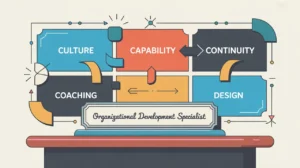
What Does the Learning Lead Role Involve?
A learning lead is responsible for designing, coordinating, and overseeing an organization’s learning and capacity-building initiatives. This includes developing training strategies, managing learning programs, supervising learning staff, and ensuring that learning activities align with organizational goals. The role typically sits within human resources, organizational development, or program functions. In nonprofits and social enterprises, learning leads play a critical role in building staff capabilities, strengthening organizational culture, and ensuring that learning contributes to mission impact.
At What Level does this Role Operate?
Mid Level: This role typically reports to a director of learning, HR manager, or organizational development lead. It often includes supervisory responsibilities over learning clerks, specialists, or training coordinators and involves both strategic planning and hands-on program management.
Relative Employability: Learning lead roles are increasingly valued across nonprofits and social enterprises that invest in continuous learning, leadership development, and compliance training. As organizations focus more on building internal capacity, skilled learning leads are in steady demand.
Relative Pay Scale: Learning lead roles sit within mid-level pay bands, reflecting their combination of strategic oversight, program design, and leadership responsibilities.
What are the Key Responsibilities and Activities?
- Design and implement organizational learning strategies and training programs that align with strategic goals
- Manage the development, delivery, and evaluation of training content, workshops, and capacity-building initiatives
- Supervise learning and training staff, providing guidance and ensuring quality across learning activities
- Coordinate with department heads and program leads to identify learning needs and design appropriate interventions
- Oversee learning management systems (LMS) and other digital platforms to support training delivery and tracking
- Monitor and evaluate the effectiveness of learning programs, using data and feedback to inform improvements
- Facilitate training sessions, leadership development workshops, and knowledge-sharing activities as needed
- Promote a culture of continuous learning and professional growth across the organization
What Core Competencies and Qualifications are Needed?
Required Qualifications and Experience
The following reflect common qualifications and experience expected for this role, while recognizing that pathways may vary by context, organization, and region.
- Academic background in education, human resources, organizational development, or related fields, or equivalent professional experience
- Several years of experience in training, learning and development, or organizational development roles, including supervisory responsibilities
- Strong understanding of adult learning principles, instructional design, and capacity-building methodologies
- Experience managing learning programs, staff, and digital platforms such as LMS systems
- Excellent facilitation, communication, and strategic planning skills
- Ability to translate organizational priorities into effective learning initiatives
Key Competencies
- Learning strategy development and implementation
- Program design and evaluation
- Team supervision and leadership
- LMS and digital platform management
- Facilitation and training delivery
- Stakeholder engagement and learning needs assessment
- Continuous improvement and learning culture building
How are AI and Automation Shaping this Role?
An AI-native learning lead will look to AI and automation to personalize learning pathways, optimize program delivery, and improve evaluation. They can use AI tools to analyze training needs, recommend tailored learning journeys, and generate real-time insights on participation and impact. Automation can support course enrollment, scheduling, feedback collection, and reporting, allowing learning leads to focus on content quality, strategy, and facilitation. By leveraging these tools, learning leads can create more adaptive and scalable learning ecosystems.
What Career Pathways and Transferable Skills are Associated with this Role?
Learning lead roles can lead to positions such as director of learning, HR director, organizational development lead, or strategy manager. The skills developed in learning strategy, program management, team leadership, and facilitation are highly transferable across nonprofits, social enterprises, education institutions, and corporate training environments. This role provides a strong pathway toward senior leadership positions that shape organizational culture and talent development strategies.