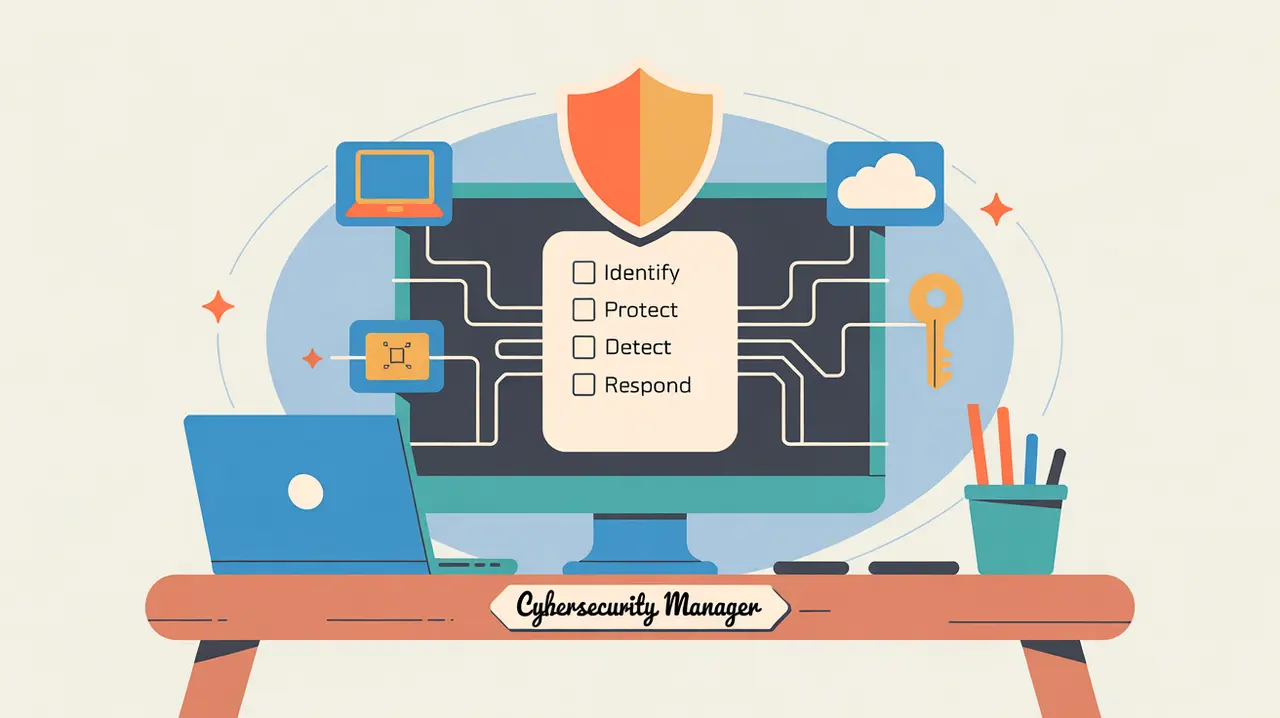
What Does the Cybersecurity Manager Role Involve?
A cybersecurity manager leads the development and implementation of strategies, policies, and systems that protect an organization’s digital assets, information, and infrastructure from security threats. This involves overseeing security operations, managing risk assessments, responding to incidents, guiding teams on best practices, and ensuring compliance with relevant regulations and standards. The role typically sits within information technology, data, or risk management functions depending on the organization’s structure. In both nonprofits and social enterprises, cybersecurity managers play a crucial role in safeguarding sensitive data, maintaining stakeholder trust, and ensuring operational continuity in an increasingly digital environment.
At What Level does this Role Operate?
Senior Level: This role typically reports to a chief technology officer, chief information security officer, or director of data and IT. It involves strategic leadership of cybersecurity initiatives, oversight of technical teams or vendors, and responsibility for ensuring that security frameworks align with organizational objectives and regulatory requirements.
Relative Employability: Cybersecurity manager roles are in high and growing demand across nonprofits, social enterprises, philanthropic institutions, educational organizations, and the private sector. As cyber threats increase, organizations of all sizes are prioritizing professionals who can combine technical expertise with strategic leadership.
Relative Pay Scale: Within nonprofits and social enterprises, cybersecurity manager roles sit in the upper mid to senior pay bands, reflecting their technical specialization, leadership responsibilities, and risk management significance.
What are the Key Responsibilities and Activities?
- Develop and implement organizational cybersecurity strategies, policies, and protocols
- Lead security risk assessments and vulnerability testing across systems and networks
- Oversee security monitoring, threat detection, and incident response processes
- Ensure compliance with data protection regulations and cybersecurity standards
- Manage cybersecurity teams or vendors, ensuring timely and effective execution of security measures
- Collaborate with IT, data, operations, and leadership teams to integrate security into all organizational activities
- Provide training and guidance to staff to promote security awareness and best practices
- Prepare reports and briefings for leadership on security risks, incidents, and mitigation strategies
What Core Competencies and Qualifications are Needed?
Required Qualifications and Experience
The following reflect common qualifications and experience expected for this role, while recognizing that pathways may vary by context, organization, and region.
- Relevant academic background in information technology, computer science, cybersecurity, or a related field, or equivalent professional experience
- Several years of experience in cybersecurity, IT security operations, or information risk management
- Strong understanding of security frameworks, regulatory standards, and threat landscapes
- Demonstrated ability to lead teams, manage incidents, and implement security strategies
- Professional certifications such as CISSP, CISM, or equivalent are often preferred
Key Competencies
- Strategic cybersecurity leadership and planning
- Technical expertise in security systems, protocols, and threat analysis
- Risk assessment and mitigation abilities
- Team leadership and vendor management
- Communication and advisory skills for non-technical audiences
- Strong problem solving and situational awareness
How are AI and Automation Shaping this Role?
An AI-native cybersecurity manager will look to AI and automation to enhance threat detection, response, and prevention. They can use AI tools to monitor network activity for anomalies, prioritize risks based on predictive analysis, and automate repetitive security tasks such as patch management and log analysis. Automation can support incident response workflows and reporting, allowing the manager to focus on strategic oversight and rapid decision making during security events. By integrating AI thoughtfully, cybersecurity managers can strengthen the organization’s resilience and respond more effectively to evolving threats.
What Career Pathways and Transferable Skills are Associated with this Role?
Cybersecurity manager roles often lead to senior positions such as chief information security officer, chief technology officer, or director of data and risk. The skills developed in strategic security leadership, risk management, and technical oversight are highly transferable across nonprofits, social enterprises, corporations, educational institutions, government agencies, and international organizations. Professionals in this role are well positioned to shape cybersecurity strategies at the highest organizational levels.