Importance of Logic Model
A logic model provides a clear, visual representation of how a program or initiative is expected to work. It is important because it simplifies complex strategies into a structured flow that links resources to activities, outputs, and outcomes. In development and social innovation, logic models matter because they enhance communication, clarify assumptions, and support both planning and evaluation.
Definition and Features
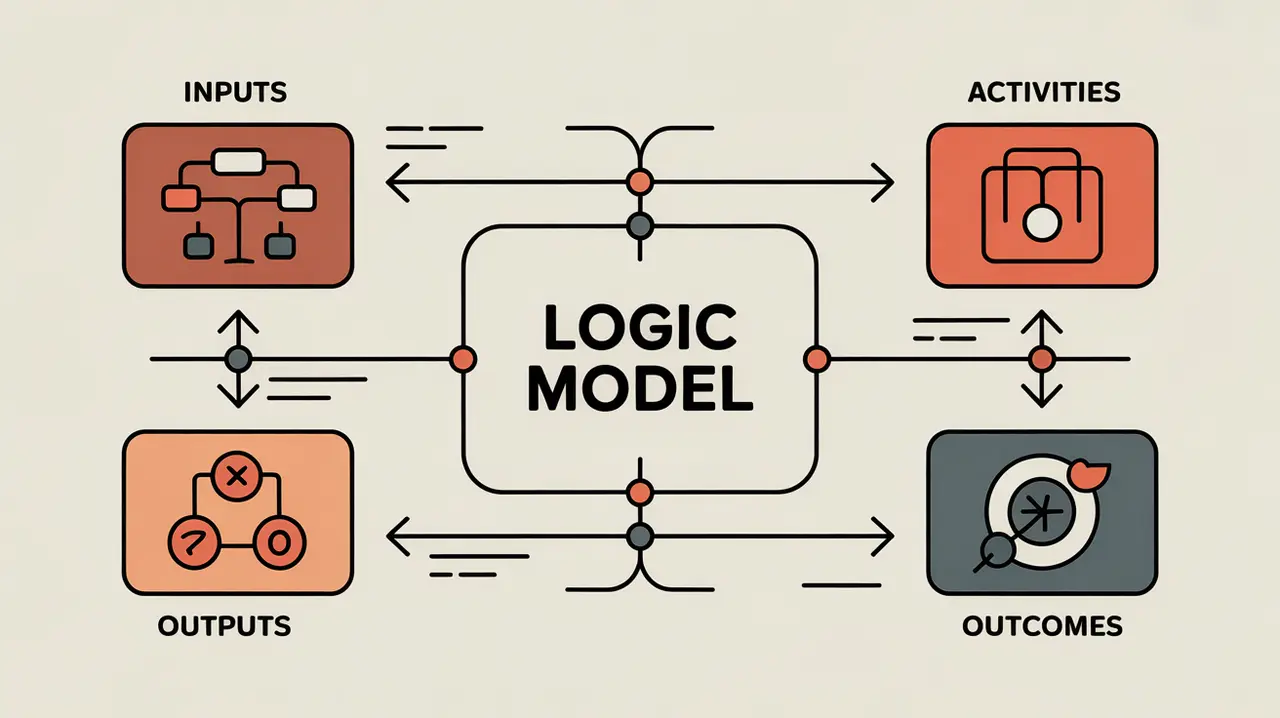
A logic model is a structured framework that illustrates the sequence of inputs, activities, outputs, outcomes, and impact within a program or initiative. Its defining features include:
- Inputs – resources such as funding, staff, and infrastructure.
- Activities – actions or interventions undertaken.
- Outputs – immediate products or deliverables from activities.
- Outcomes – short- and medium-term effects on participants or systems.
- Impact – long-term systemic or societal changes.
- Linear Structure – presents cause-and-effect logic in a simplified chain.
How this Works in Practice
In practice, a nonprofit working on youth employment may design a logic model that links resources (inputs like trainers and funding) to activities (vocational workshops), outputs (number of youth trained), outcomes (increased employment rates), and impact (reduced youth unemployment nationally). Funders often require logic models for grant applications to demonstrate coherence between goals and actions. Challenges include oversimplifying complexity, failing to capture non-linear dynamics, and focusing on reporting rather than learning.
Implications for Social Innovation
Logic models support social innovation by providing clarity and coherence in program design. They help practitioners and funders align expectations, track progress, and evaluate results. While less flexible than adaptive frameworks, they are valuable tools for grounding innovation in structured planning and accountability. Logic models can ensure that creative solutions are linked to measurable pathways toward systemic change.