Importance of Model Training vs Inference
Model training and inference are two fundamental stages in the lifecycle of Artificial Intelligence systems. Training is the process of teaching a model to recognize patterns by exposing it to data, while inference is the application of that trained model to make predictions or generate outputs. Their importance today lies in the growing use of AI in both research and real-world applications, where organizations must balance the resource-intensive process of training with the practical needs of running models efficiently at scale.
For social innovation and international development, understanding the difference between training and inference matters because resource allocation, infrastructure, and impact depend on it. Training may require powerful computing clusters and large datasets that are out of reach for many organizations, while inference can often be run on more modest systems, making AI accessible for local use.
Definition and Key Features
Training involves adjusting the parameters of a model by minimizing error across many iterations on a dataset. This is often computationally expensive and requires large amounts of labeled or unlabeled data, depending on the approach. For example, training a deep learning model might take weeks on high-performance GPUs or TPUs.
Inference, by contrast, uses a trained model to process new inputs and generate outputs. It is the stage that end users interact with, whether through a chatbot generating responses, a diagnostic model classifying medical images, or a recommendation engine suggesting resources. Inference is optimized for speed, scalability, and cost-efficiency, as it must operate reliably in production environments.
How this Works in Practice
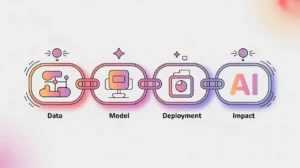
In practice, training and inference are linked but distinct. A model trained on global data may be fine-tuned with local datasets to make it more relevant to specific communities. Once deployed, inference requires efficient serving infrastructure, such as APIs or edge devices, that can deliver results in real time or near real time.
Challenges include ensuring that training data reflects the diversity of real-world contexts, preventing bias, and maintaining alignment between training conditions and inference environments. Models may also degrade over time if inference data shifts away from the patterns seen during training, requiring retraining or ongoing monitoring. Balancing these stages is key to sustaining impact.
Implications for Social Innovators
The distinction between training and inference is especially relevant for mission-driven organizations. Health initiatives may not have the resources to train large diagnostic models but can use pre-trained models for inference in local clinics. Education platforms can fine-tune existing models for regional curricula and run inference to personalize learning. Humanitarian agencies often rely on inference for rapid decision-making, applying pre-trained models to analyze satellite imagery or crisis reports in real time.
By understanding when to invest in training and when to focus on inference, organizations can make strategic choices that maximize both efficiency and impact.