What Does the Chief of Staff Role Involve?
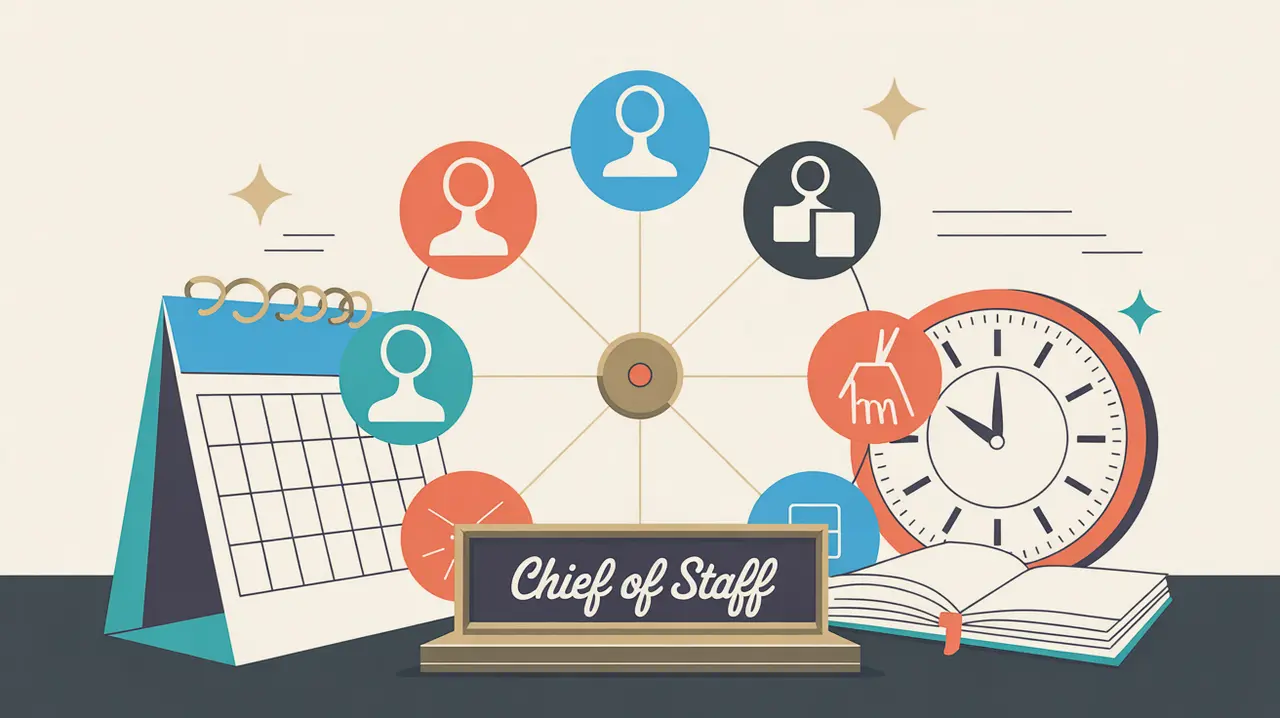
A chief of staff (CoS) serves as a strategic partner and operational integrator to the CEO and executive team, ensuring that priorities are clearly defined, aligned across the organization, and effectively executed. This involves managing strategic initiatives, facilitating communication between leadership and departments, supporting decision making, and often overseeing key cross-functional projects. The CoS plays a critical role in translating vision into action, coordinating executive workflows, and ensuring the organization’s leadership functions smoothly. In both nonprofits and social enterprises, the chief of staff acts as a trusted advisor, problem solver, and bridge between strategy and implementation.
At What Level does this Role Operate?
Executive Level: This role operates at the highest levels of organizational leadership, typically reporting directly to the CEO or president and working closely with the executive team. The CoS may oversee or coordinate special projects, manage strategic planning processes, and represent leadership in internal and external forums.
Relative Employability: Chief of staff roles are increasingly common across nonprofits, social enterprises, philanthropic organizations, and mission-driven companies. They are highly sought after for individuals who combine strategic thinking, operational expertise, and interpersonal skills, particularly in organizations experiencing growth or complexity.
Relative Pay Scale: Within nonprofits and social enterprises, chief of staff roles typically sit in the upper mid to executive pay bands, reflecting their strategic importance and proximity to organizational leadership.
What are the Key Responsibilities and Activities?
- Serve as a strategic partner and advisor to the CEO and executive team
- Coordinate executive priorities and ensure alignment across departments and functions
- Manage strategic initiatives, special projects, and key organizational processes
- Facilitate effective communication between leadership and staff
- Support decision making through analysis, briefing materials, and follow-up coordination
- Lead or oversee strategic planning and performance management processes
- Represent the CEO in internal and external meetings as needed
- Identify and address organizational bottlenecks to ensure efficient execution
What Core Competencies and Qualifications are Needed?
Required Qualifications and Experience
The following reflect common qualifications and experience expected for this role, while recognizing that pathways may vary by context, organization, and region.
- Relevant academic background in business, public administration, public policy, or a related field, or equivalent professional experience
- Significant leadership or management experience, ideally with exposure to strategic planning, operations, or executive functions
- Demonstrated ability to manage multiple priorities and coordinate across teams
- Strong understanding of organizational dynamics and strategic decision making
- Experience working closely with senior leadership in fast-paced or complex environments
Key Competencies
- Strategic thinking and operational execution skills
- Strong communication, facilitation, and relationship-building abilities
- Analytical and problem-solving capacity
- Cross-functional leadership and coordination skills
- High levels of discretion, judgment, and emotional intelligence
- Ability to translate vision into structured plans and actions
How are AI and Automation Shaping this Role?
An AI-native chief of staff will look to AI and automation to manage complexity, streamline executive workflows, and enhance strategic insight. They can use AI tools to synthesize information, prepare briefings, track priorities, and monitor organizational performance. Automation can support scheduling, reporting, and follow-up coordination, freeing the CoS to focus on strategic leadership and problem solving. By integrating AI strategically, chiefs of staff can increase organizational agility and improve executive decision making.
What Career Pathways and Transferable Skills are Associated with this Role?
Chief of staff roles are often stepping stones to senior executive positions, including COO, CFO, or CEO, due to their cross-functional exposure and strategic vantage point. The combination of strategic acumen, operational expertise, and leadership experience developed in this role is transferable across nonprofits, social enterprises, corporate entities, government institutions, and philanthropic organizations.