Importance of Event Driven Architecture
Event-Driven Architecture (EDA) is a design approach in software and AI systems where actions are triggered by events, such as user interactions, sensor outputs, or system updates. Its importance today comes from the rise of real-time applications that must respond quickly and flexibly to changing conditions. Unlike traditional request-response systems, EDA emphasizes responsiveness and adaptability, making it well-suited for dynamic environments.
For social innovation and international development, event-driven architecture matters because mission-driven organizations often work in contexts where timely responses are critical. From disaster alerts to mobile health notifications, systems that can act as soon as events occur enable faster interventions, more efficient services, and better community engagement.
Definition and Key Features
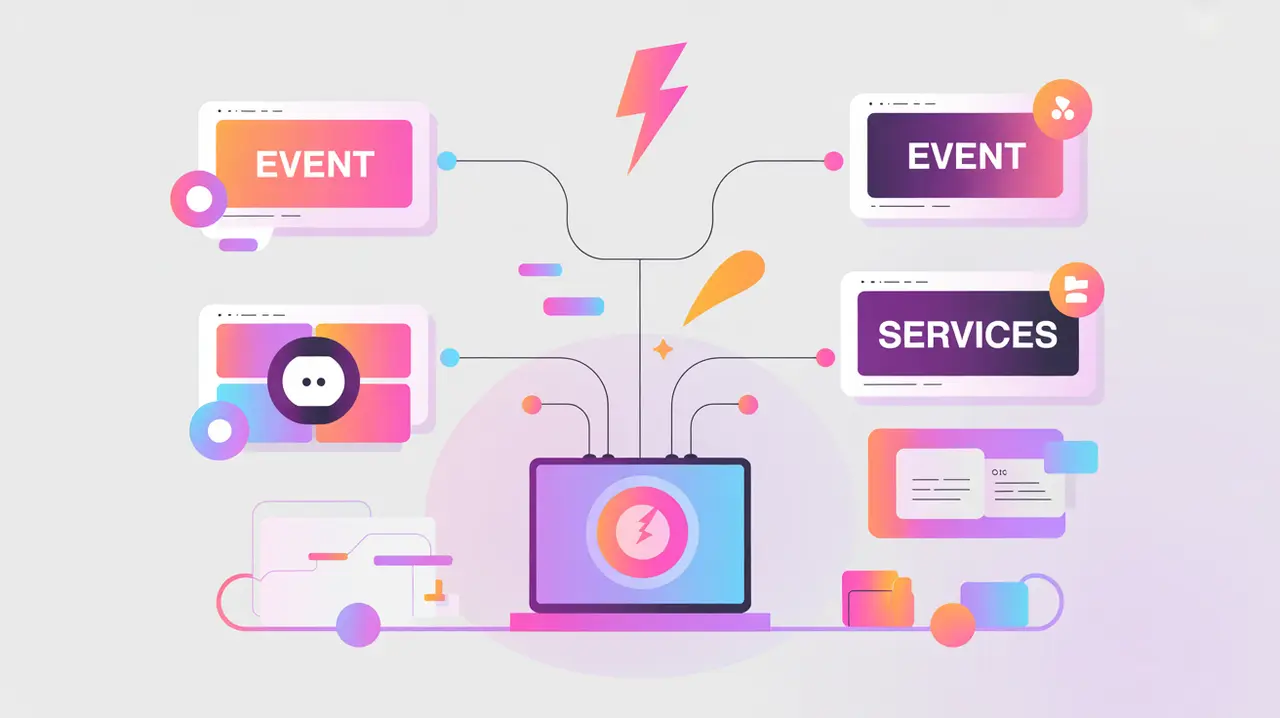
In EDA, systems are built around events, which are records of something that has happened. Components called event producers generate these events, which are then transmitted through channels or message brokers to event consumers, which process them. Common technologies supporting EDA include Apache Kafka, RabbitMQ, and cloud-native services like AWS EventBridge.
It is not the same as batch processing, which groups data for later analysis, nor is it equivalent to traditional service-oriented architectures that depend on synchronous requests. Instead, EDA enables asynchronous, loosely coupled communication, allowing systems to scale and adapt more easily to diverse workflows.
How this Works in Practice
In practice, event-driven systems improve scalability and resilience by decoupling components. For example, when a mobile app registers a new user, an event can trigger separate processes for sending a welcome message, updating analytics, and assigning user permissions, all without direct coordination. This modularity allows systems to evolve quickly, adding or modifying event consumers without disrupting the whole system.
Challenges include designing reliable event flows, avoiding message overload, and ensuring that events are processed in the correct order. Monitoring and governance are essential, as poorly managed event streams can cause duplication or loss of critical information. When implemented carefully, EDA supports agility and responsiveness across complex, distributed systems.
Implications for Social Innovators
Event-driven architecture has direct applications in mission-driven work. Health platforms use it to trigger automated reminders for vaccinations when a patient record is updated. Humanitarian organizations rely on it for early-warning systems, where seismic or weather events automatically generate alerts to communities at risk. Education platforms apply EDA to send immediate feedback to students when they complete assignments.
By enabling systems to act the moment something happens, event-driven architecture helps organizations respond with speed and precision, strengthening their ability to serve communities in real time.