Importance of API Gateways
API Gateways are control points that sit between clients and backend services, routing requests, enforcing policies, and shaping traffic. They matter now because modern systems are increasingly composed of many services, models, and data sources that must interoperate securely and predictably. A gateway provides a single, consistent interface to this complexity, translating protocols, validating requests, and applying rate limits so that applications remain stable under changing demand.
For social innovation and international development, API Gateways are practical tools that make advanced capabilities reachable in constrained settings. They help organizations expose AI models, data services, and partner integrations through one secure front door. This reduces operational burden, makes governance auditable, and allows teams to add or swap components without disrupting how communities and staff access essential digital services.
Definition and Key Features
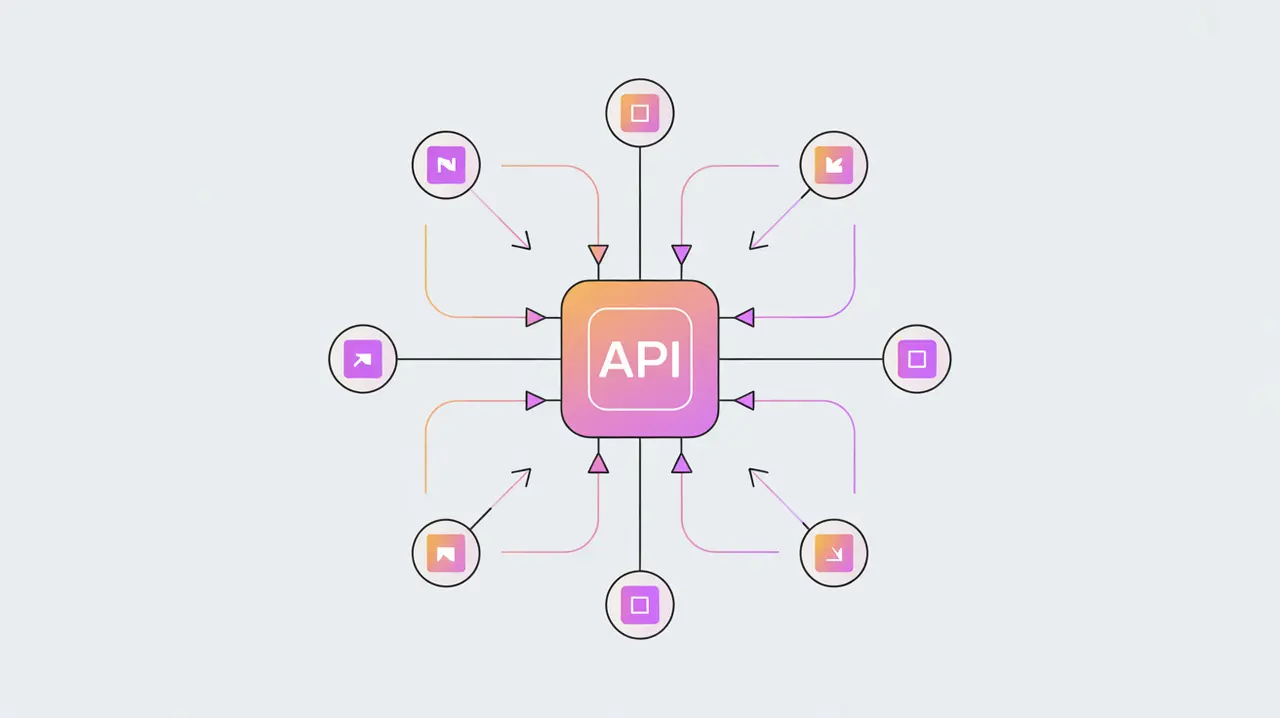
An API Gateway is a reverse proxy specialized for APIs. It receives incoming requests, authenticates and authorizes callers, routes traffic to the appropriate service, and returns responses. Core features include request transformation, caching, rate limiting, quota management, and observability hooks such as logging and tracing. Many gateways also provide developer portals and key issuance to streamline onboarding for internal teams and external partners.
API Gateways are not the same as load balancers, which primarily distribute traffic across instances. They are also distinct from service meshes, which focus on service-to-service communication inside a cluster. Gateways govern the edge where clients, partners, or devices enter the system, applying security, policy, and productization concerns so that backend services can focus on business logic.
How this Works in Practice
In practice, deploying a gateway starts with defining routes that map paths to backend services or serverless functions. Policies are attached to these routes to control access using OAuth or OIDC tokens, apply input validation with schemas, sanitize headers, and shape traffic with rate limits or circuit breakers. Transformations rewrite requests and responses to normalize formats, which is valuable when integrating legacy systems with modern APIs or model endpoints.
Operationally, teams integrate the gateway with observability stacks to emit metrics, logs, and traces for every call. Caching at the gateway can offload repeated requests and reduce latency, while mutual TLS and IP allowlists add defense in depth. Multi-tenant deployments use separate products or plans to expose different tiers, each with its own quotas and analytics. Common choices include managed gateways from cloud providers and open source options that run alongside Kubernetes and service meshes, with the gateway handling north 6south traffic and the mesh handling east 7west traffic.
Implications for Social Innovators
API Gateways help mission-driven teams ship reliable services despite fragmented infrastructure. A health program can expose a single endpoint for decision-support models while the gateway enforces patient privacy policies, throttles misuse, and records audit trails. An education platform can present one public API for content and assessments while routing to different backends by country, curriculum, or language, with caching at the edge to serve schools on limited bandwidth.
Humanitarian operations can onboard partner organizations through a developer portal, issuing scoped keys that grant access only to the datasets or models they need, and revoking them quickly if keys are compromised. Civil society groups can publish open data through a gateway that meters usage, protects against scraping that would overwhelm servers, and provides analytics on how communities engage. API Gateways turn a complex estate of services into a dependable public interface that organizations can govern, evolve, and trust.