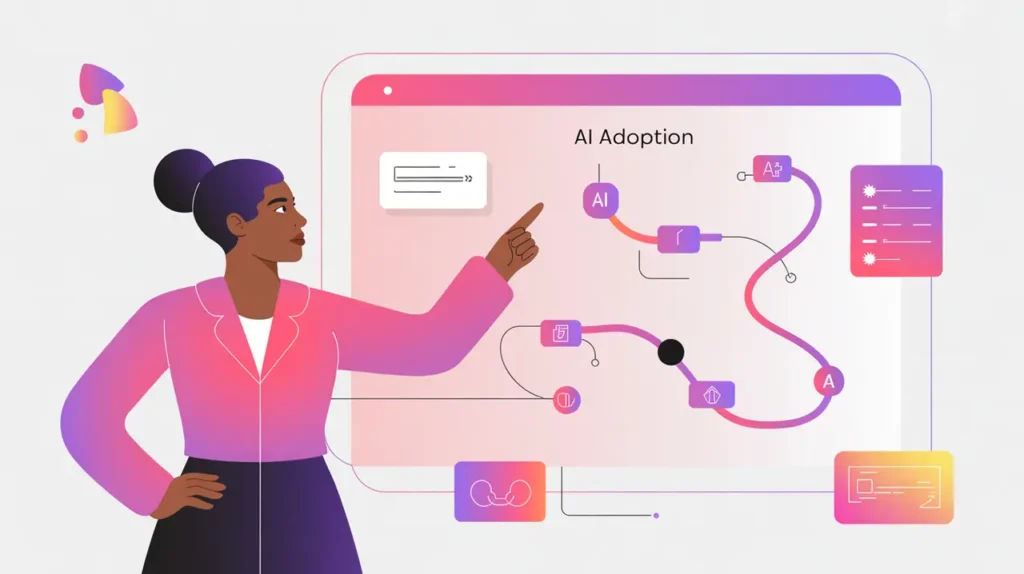
Importance of Change Fatigue and Adoption Barriers
Change Fatigue and Adoption Barriers describe the challenges individuals and organizations face when adapting to continuous technological shifts. Change fatigue arises when employees experience exhaustion from repeated transformations, while adoption barriers are the structural, cultural, or technical obstacles that slow or block new technology uptake. Their importance today lies in the rapid pace of AI-driven change, where frequent rollouts of tools and systems can overwhelm people instead of empowering them.
For social innovation and international development, addressing these challenges matters because mission-driven organizations rely on staff resilience and community trust to ensure technology adoption enhances, rather than disrupts, impact.
Definition and Key Features
Change fatigue has been studied in organizational psychology as a response to constant restructuring, uncertainty, and pressure. Adoption barriers include lack of training, insufficient resources, poor infrastructure, or cultural resistance to new tools. Together, they reflect the human and systemic limits to how much change organizations can absorb.
They are not the same as one-off resistance to change, which may fade once systems are explained. Nor are they equivalent to technical glitches, which can be fixed by IT teams. Change fatigue and adoption barriers point to deeper organizational dynamics and capacity challenges.
How this Works in Practice
In practice, change fatigue may manifest when teachers feel overwhelmed by multiple new digital platforms or when humanitarian staff are asked to use new data systems without clear benefits. Adoption barriers might include language mismatches in AI interfaces, lack of reliable connectivity, or absence of leadership support.
Challenges include balancing the urgency of digital transformation with the need for pacing, providing adequate training, and building trust that new systems will add value rather than create extra burdens. Successful adoption often requires co-design with users and clear communication about benefits and risks.
Implications for Social Innovators
Change fatigue and adoption barriers affect all mission-driven sectors. Health workers may resist AI diagnostics if they feel overloaded or excluded from decision-making. Education initiatives may fail if teachers are asked to adopt tools without sufficient training. Humanitarian agencies may face adoption barriers when field staff lack infrastructure or fear surveillance risks. Civil society organizations must consider how change processes affect volunteer energy and community engagement.
By addressing change fatigue and adoption barriers, organizations can pace transformation, strengthen resilience, and ensure AI adoption supports sustainable, human-centered impact.