What Does the Risk Assistant Role Involve?
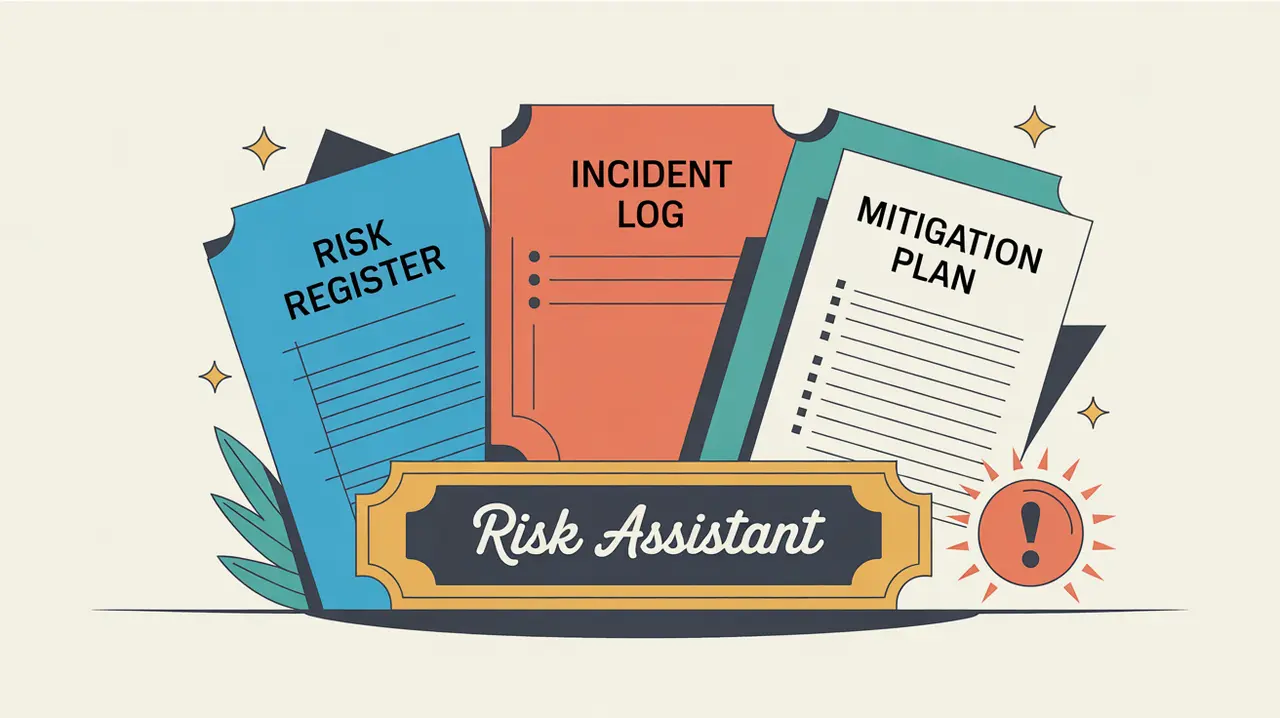
A Risk Assistant is responsible for providing administrative, operational, and data support to the organization’s risk management function. They assist in maintaining risk registers, tracking mitigation activities, organizing documentation, and supporting the preparation of reports and assessments. Their work ensures that risk management processes are well-organized, up to date, and integrated into routine organizational operations.
In nonprofits and social enterprises, Risk Assistants play an important support role in ensuring that emerging risks are identified, documented, and communicated effectively, enabling the organization to act proactively and maintain resilience.
At What Level does this Role Operate?
Entry Level: Risk Assistants typically work under the supervision of a Risk Analyst, Risk Manager, Compliance Officer, or Operations Lead. Their responsibilities are focused on administrative and coordination tasks that contribute to broader risk management activities.
Relative Employability: Risk Assistant roles are becoming more common in nonprofits, NGOs, and social enterprises as organizations formalize their risk functions. They offer a solid entry point for individuals interested in risk management, compliance, operations, or strategy.
Relative Pay Scale: Risk Assistants generally occupy the lower pay bands. Their compensation reflects their support role, sitting above clerical positions but below analyst or officer levels.
What are the Key Responsibilities and Activities?
- Maintain and update risk registers, tracking risks, mitigation measures, and responsible parties
- Assist with collecting and organizing data required for risk assessments
- Support the scheduling and documentation of risk review meetings and training sessions
- Prepare draft reports, summaries, or presentations for internal stakeholders
- Monitor deadlines and follow up on mitigation actions to ensure accountability
- Maintain organized records and documentation related to risk assessments, policies, and frameworks
- Provide general administrative support to the risk management team
- Support communication and coordination between teams involved in risk management activities
What Core Competencies and Qualifications are Needed?
Required Qualifications and Experience
The following reflect common qualifications and experience expected for this role, while recognizing that pathways may vary by context, organization, and region.
- Relevant academic background in administration, business, finance, public policy, or related fields
- Prior experience in administrative or coordination roles is advantageous but not always required
- Familiarity with spreadsheets, databases, and documentation tools
- Interest in risk management, compliance, or organizational strategy
Key Competencies
- Strong organizational and administrative skills
- Attention to detail and accuracy in record keeping
- Clear written and verbal communication abilities
- Ability to manage multiple tasks and follow up consistently
- Discretion and professionalism in handling sensitive information
- Willingness to learn risk frameworks and methodologies
How are AI and Automation Shaping this Role?
An AI-native Risk Assistant can use AI tools to automate data entry into risk registers, generate reminders for mitigation deadlines, and organize documentation efficiently. AI can support the preparation of draft risk summaries and flag anomalies or changes in risk data. These tools free assistants from repetitive administrative work, allowing them to focus more on coordination and learning risk management practices.
What Career Pathways and Transferable Skills are Associated with this Role?
Risk Assistants can progress to roles such as Risk Analyst, Compliance Officer, Operations Officer, or Strategy Associate. Their skills in organization, data handling, and coordination are transferable to roles in finance, operations, and program support. Over time, they may specialize in risk assessment, compliance frameworks, or strategic planning, taking on greater responsibility for risk analysis and management functions.