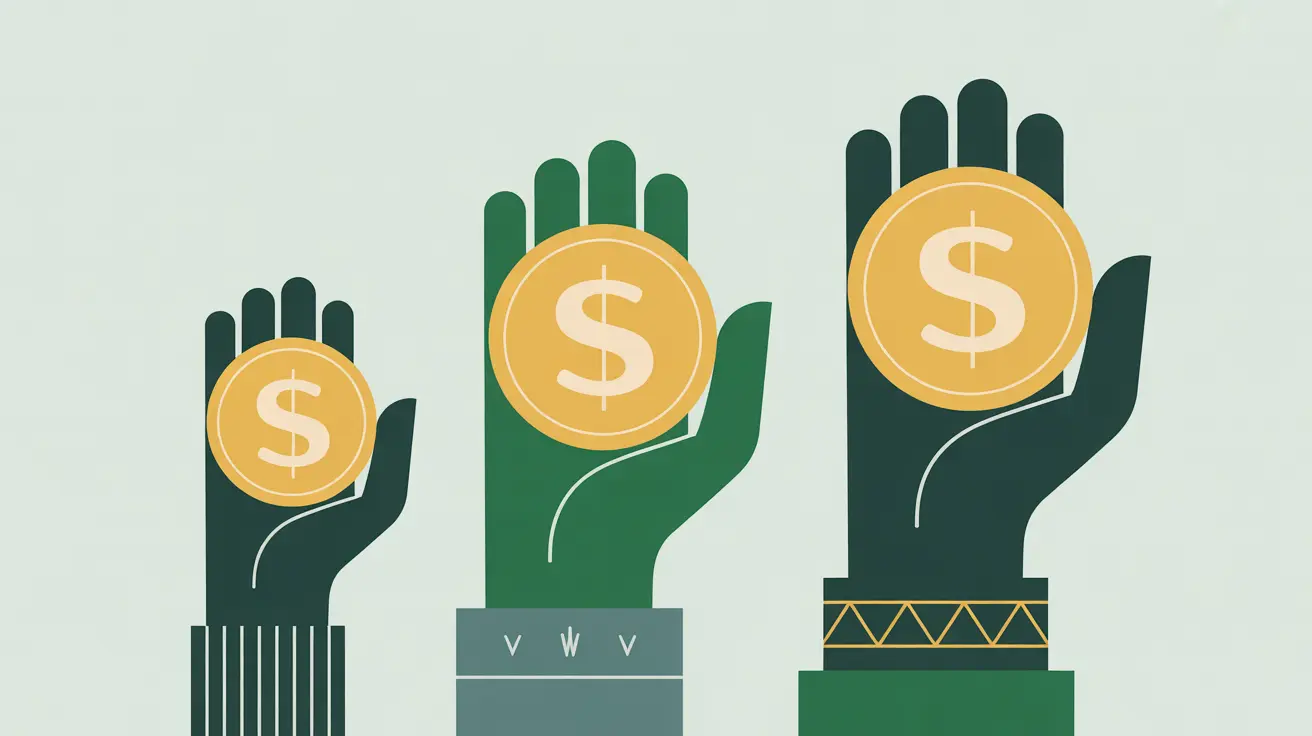
Importance of Individual Donors (Small, Mid, Major)
Individual donors form the broadest and often most reliable base of nonprofit funding. This matters because unlike institutional funders, individuals can give with fewer restrictions and build long-term relationships with organizations. For nonprofits in social innovation and international development, cultivating individuals at different giving levels ensures diversification, stability, and flexibility. Boards and fundraising teams value individual donors not only for their financial support but also for the advocacy, networks, and credibility they bring.
Definition and Features
Individual donors are defined as people who contribute personal funds to a nonprofit, typically categorized into tiers:
- Small Donors: provide modest, often recurring gifts that create a wide funding base.
- Mid-Level Donors: give larger, more consistent contributions and are often cultivated for upgrade to major giving.
- Major Donors: provide significant gifts, sometimes multi-year or transformational in scale.
Key features include:
- Motivations: personal connection, belief in mission, social recognition, or impact.
- Engagement: cultivated through communications, events, and stewardship.
- Flexibility: often more open to unrestricted support compared to institutional donors.
Individual donors differ from institutional donors in that they are driven by personal values rather than organizational priorities.
How This Works in Practice
In practice, nonprofits segment individual donors into tiers based on giving capacity and engagement potential. For example, a nonprofit may define small donors as giving under $500 annually, mid-level as $500 6 6$5,000, and major donors as $5,000 or more, depending on context. Fundraising teams design tailored strategies: mass appeals for small donors, personalized cultivation for mid-level donors, and intensive relationship-building for major donors. Boards often play a role in stewarding major donors, while staff and digital campaigns engage smaller donors at scale.
Implications for Social Innovation
For nonprofits in social innovation and international development, individual donors provide both financial resilience and grassroots legitimacy. Transparent reporting reduces information asymmetry by showing donors of all sizes how their contributions create impact. Small donors broaden reach and engagement, mid-level donors provide stability, and major donors enable bold initiatives. By nurturing relationships across all tiers, nonprofits can create a balanced portfolio that reduces dependency on large institutions, empowers diverse communities to contribute, and strengthens the collective drive toward systemic change.