Importance of Fundraising ROI
Fundraising return on investment (ROI) measures how much revenue is generated for every dollar spent on fundraising. It is the complement to the cost per dollar of contribution raised, but framed positively. This matters because it shows boards and donors whether investments in fundraising are producing sustainable financial returns. While high ROI suggests strong efficiency, nonprofits must also balance it against long-term capacity building. For organizations in social innovation and international development, fundraising ROI is particularly critical since cultivating major donors, institutional funders, and global partners often requires substantial upfront investment with payoffs spread over multiple years.
Definition and Features
Fundraising ROI is defined as:
Contributions divided by Fundraising Expenses.
Key features include:
- Efficiency Indicator: shows how many dollars are raised per dollar spent.
- Benchmark Use: a ratio above 3:1 (three dollars raised for every dollar spent) is often considered healthy, though benchmarks vary by fundraising channel.
- Donor Confidence: external stakeholders often use it to judge financial stewardship.
- Complementary Role: should be reviewed with CRD and donor retention to avoid short-term bias.
How This Works in Practice
If a nonprofit raises $6 million while spending $1.5 million on fundraising, its ROI is 4.0, meaning four dollars raised for every dollar invested. Boards often compare ROI across different fundraising channels to inform resource allocation. A lower ROI from events may still be justified if they also build awareness and donor engagement. International NGOs may see lower ROI in early years of donor acquisition campaigns, but higher long-term returns as relationships mature.
Implications for Social Innovation
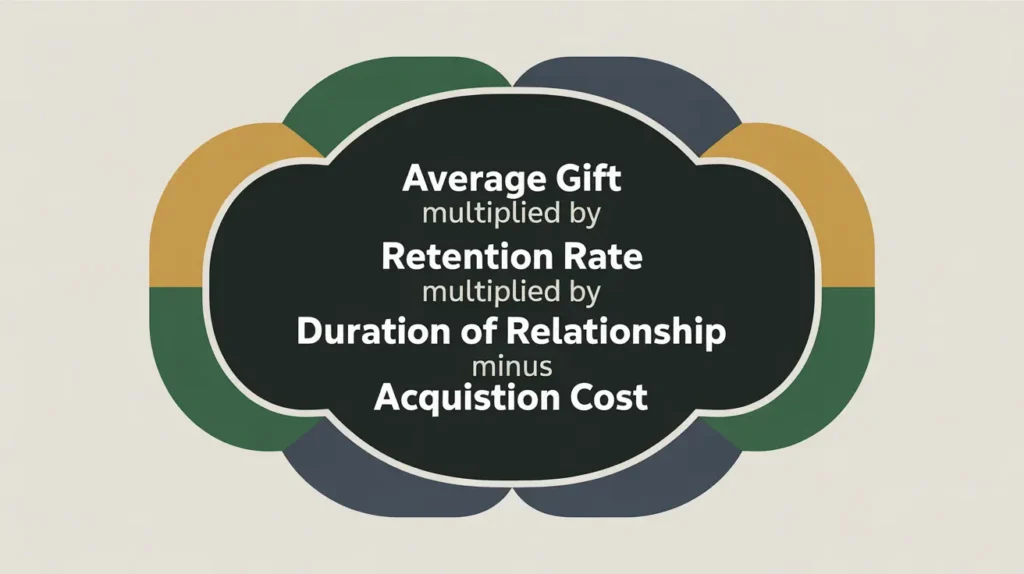
For nonprofits in social innovation and international development, fundraising ROI provides a critical lens on sustainability and efficiency. High ROI reassures funders that investments in development capacity are yielding results. However, focusing solely on maximizing ROI can disincentivize the upfront investments required to cultivate institutional and multi-year partners. By interpreting ROI alongside donor lifetime value and mission outcomes, nonprofits can make the case that fundraising is not just about efficiency but about building the diversified, long-term revenue base needed to drive systemic change.