What Does the Governance Officer Role Involve?
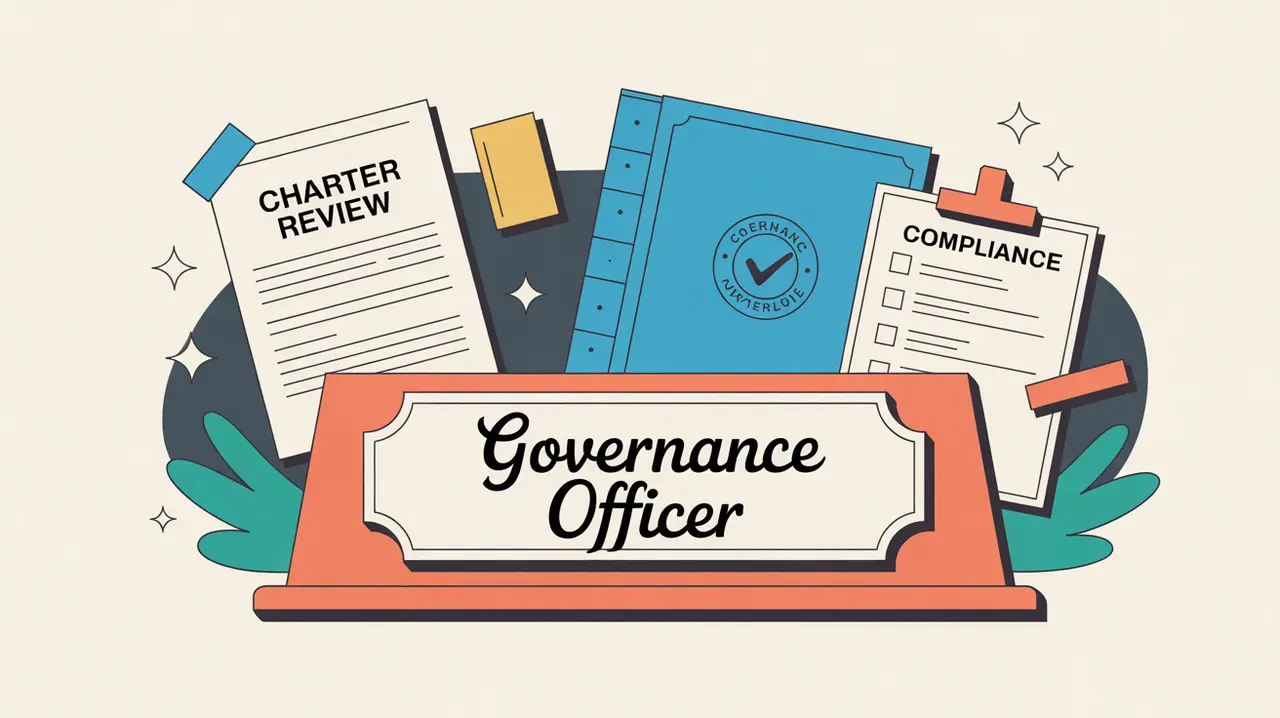
A governance officer is responsible for managing and coordinating governance processes that support effective decision making, compliance, and accountability within an organization. This includes administering board and committee operations, maintaining governance records, ensuring adherence to legal and regulatory requirements, and advising leadership and board members on governance policies and procedures. The role typically sits within the executive office, legal, or operations function and acts as a key liaison between the board, senior leadership, and governance support staff. In both nonprofits and social enterprises, governance officers help ensure that governance structures operate smoothly and align with organizational strategy and obligations.
At What Level does this Role Operate?
Mid Level: This role typically reports to a governance manager, director of governance, general counsel, or executive director. It focuses on operational governance oversight, coordination of board and committee activities, and advising on governance matters, while sometimes supervising assistants or clerks.
Relative Employability: Governance officer roles are in steady demand across nonprofits, social enterprises, foundations, associations, and other organizations with formal governance structures. As regulatory requirements and expectations of board performance increase, governance officers are essential for ensuring compliance and effective organizational oversight.
Relative Pay Scale: Within nonprofits and social enterprises, governance officer roles sit in mid-level pay bands, reflecting their combination of technical governance expertise, operational responsibility, and strategic advisory functions.
What are the Key Responsibilities and Activities?
- Coordinate the administration of board and committee meetings, including scheduling, agendas, materials, and minutes
- Ensure compliance with legal, regulatory, and reporting requirements related to governance
- Maintain governance records such as bylaws, policies, board rosters, and meeting documentation
- Advise leadership and board members on governance policies, procedures, and best practices
- Support the development and implementation of governance frameworks, manuals, and policies
- Track board and committee actions and ensure timely follow-up on decisions and commitments
- Contribute to board evaluations, governance reviews, and policy updates
- Serve as a liaison between the board, executive leadership, and governance support staff
- Provide guidance to governance assistants or clerks and ensure quality in governance documentation
What Core Competencies and Qualifications are Needed?
Required Qualifications and Experience
The following reflect common qualifications and experience expected for this role, while recognizing that pathways may vary by context, organization, and region.
- Academic background in law, public policy, business administration, political science, or related fields, or equivalent professional experience
- Several years of experience in governance, legal, compliance, or executive support roles
- Strong knowledge of governance principles and regulatory frameworks
- Excellent organizational and communication skills with the ability to engage senior stakeholders effectively
- Proficiency with document management systems and governance software
- Strong attention to detail and the ability to manage multiple priorities
Key Competencies
- Governance process management and coordination
- Legal and regulatory compliance oversight
- Board and leadership advisory skills
- Documentation and records management
- Stakeholder communication and facilitation
- Policy implementation and governance improvement
How are AI and Automation Shaping this Role?
An AI-native governance officer will look to AI and automation to strengthen governance workflows, improve compliance tracking, and enhance document accuracy. They can use AI tools to generate draft agendas, minutes, and reports, monitor regulatory changes, and support real-time tracking of governance actions. Automation can synchronize board calendars, manage secure document distribution, and ensure timely filing of compliance documents. By leveraging these technologies strategically, governance officers can focus more on advising leadership and refining governance systems.
What Career Pathways and Transferable Skills are Associated with this Role?
Governance officer roles can lead to positions such as governance manager, director of governance, board secretary, or general counsel. The skills developed in compliance, board operations, governance advisory, and stakeholder coordination are highly transferable across nonprofits, social enterprises, corporate governance structures, and public institutions. This role provides a strong platform for advancing into senior governance leadership and strategic advisory positions.