What Does the Recruitment Clerk Role Involve?
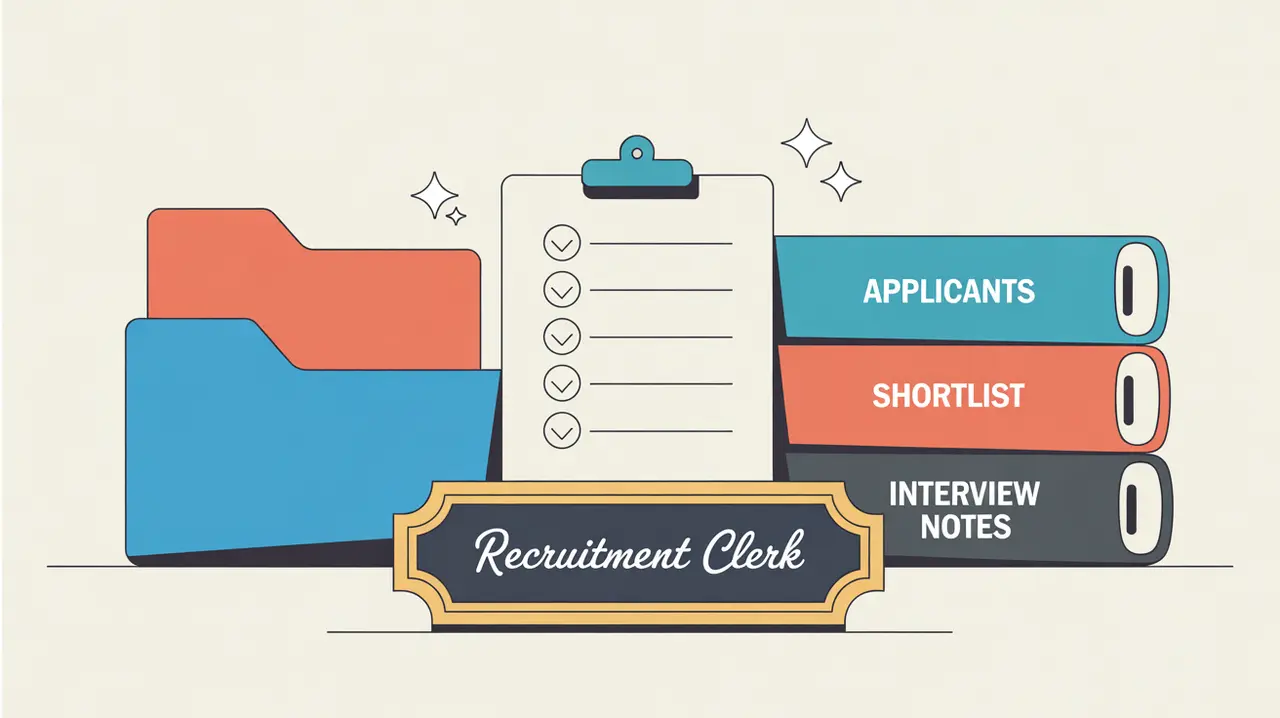
A Recruitment Clerk is responsible for providing administrative and operational support to recruitment and hiring processes within an organization. They handle documentation, scheduling, data entry, and communication tasks that keep the recruitment function organized and efficient. Their work ensures that candidate records are accurate, hiring timelines are met, and communication between candidates and hiring teams is smooth.
In nonprofits and social enterprises, Recruitment Clerks play an essential support role in maintaining fair, transparent, and well-documented hiring practices, which are critical for building trust and organizational credibility.
At What Level does this Role Operate?
Entry Level: Recruitment Clerks typically operate under the supervision of a Recruitment Officer, HR Manager, or Talent Lead. Their focus is on executing routine administrative and logistical tasks that support recruitment operations.
Relative Employability: Recruitment Clerk roles are widely available across nonprofits, NGOs, social enterprises, and public sector organizations. They offer a strong entry point into human resources and talent functions for individuals seeking to build their experience in recruitment and HR administration.
Relative Pay Scale: Recruitment Clerks usually occupy the lower pay bands, reflecting their administrative support responsibilities. Their compensation is comparable to other clerical roles across finance, operations, and program functions.
What are the Key Responsibilities and Activities?
- Manage scheduling of interviews, assessments, and recruitment-related meetings
- Maintain accurate candidate records in HR systems or applicant tracking software
- Assist with posting job advertisements on internal and external platforms
- Support candidate communication, including acknowledgments, interview logistics, and follow-ups
- Organize recruitment files, ensuring that documentation is complete and compliant with policies
- Prepare and distribute recruitment-related correspondence and materials
- Track recruitment timelines and update relevant team members on progress
- Provide general administrative support to the recruitment team as needed
What Core Competencies and Qualifications are Needed?
Required Qualifications and Experience
The following reflect common qualifications and experience expected for this role, while recognizing that pathways may vary by context, organization, and region.
- Relevant academic background in administration, business, human resources, or related fields
- Prior administrative or clerical experience is advantageous but not always required
- Familiarity with basic HR processes and office software tools
- Strong organizational and communication skills
Key Competencies
- Attention to detail and accuracy in documentation and data entry
- Organizational skills to manage multiple tasks and timelines
- Clear written and verbal communication abilities
- Professionalism and discretion in handling candidate information
- Ability to work collaboratively within a recruitment or HR team
- Reliability and consistency in task execution
How are AI and Automation Shaping this Role?
An AI-native Recruitment Clerk can use AI tools to automate interview scheduling, candidate tracking, and communications. Automated workflows can generate acknowledgment emails, update applicant databases, and flag missing documentation. AI can also help streamline job posting across platforms and surface candidate insights for recruiters, allowing clerks to focus more on quality control and coordination.
What Career Pathways and Transferable Skills are Associated with this Role?
Recruitment Clerks can progress to roles such as Recruitment Officer, Talent Acquisition Specialist, or HR Assistant. Their skills in organization, communication, and documentation are transferable to broader HR functions, operations, and administrative coordination. Over time, they may take on more responsibility for candidate screening, process design, or managing specific recruitment portfolios within larger organizations.