Importance of Road Transport
Road transport is one of the most widely used modes of transportation, providing flexibility, accessibility, and connectivity for people and goods. In international development, it is critical for linking rural and urban areas, enabling trade, and ensuring access to education, healthcare, and employment. For nonprofits and social innovators, road transport matters because it directly influences mobility, inclusion, and economic opportunity. Its importance lies in supporting both daily life and broader development goals through reliable infrastructure and services.
Definition and Features
Road transport refers to the movement of people and goods using motor vehicles on road networks. Its defining features include:
- Flexibility: door-to-door transport across short and long distances.
- Accessibility: often the only viable option in rural or remote areas.
- Infrastructure Dependence: reliant on quality and maintenance of roads and bridges.
- Modal Integration: connects with rail, air, and maritime transport for seamless logistics.
How this Works in Practice
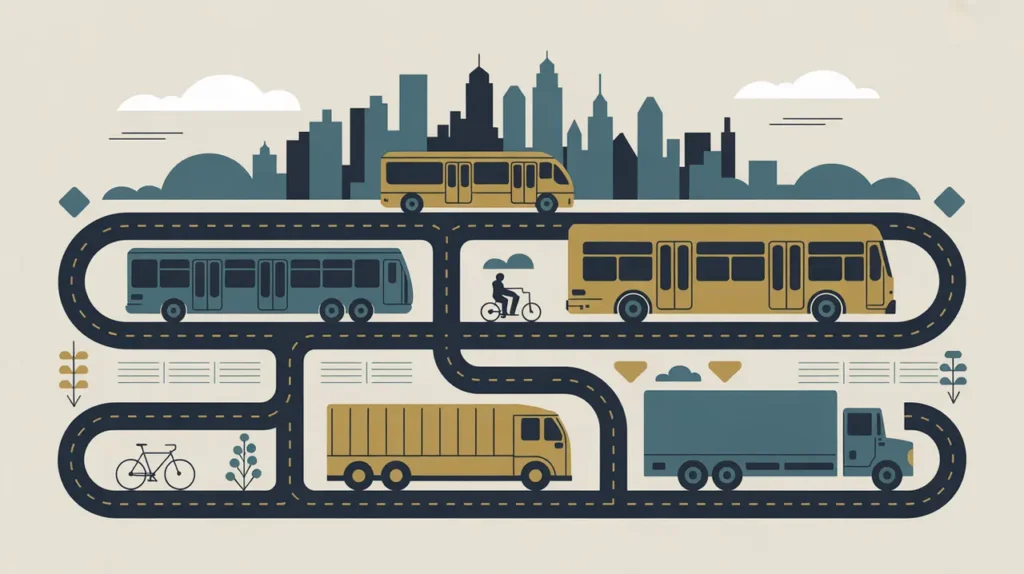
In practice, road transport includes buses, trucks, cars, motorcycles, and non-motorized options like bicycles. For example, trucks transport agricultural goods from farms to markets, while bus systems provide affordable mobility for urban and rural populations. Governments are responsible for building and maintaining roads, while private operators deliver most vehicle-based services. Challenges include poor infrastructure in developing regions, traffic congestion, high accident rates, and environmental impacts such as air pollution and carbon emissions.
Implications for Social Innovation
Road transport has significant implications for social innovation because it determines how communities connect to opportunities and services. Innovations such as electric buses, ride-sharing platforms, and smart traffic systems improve sustainability and efficiency. For proximate actors, access to safe and affordable road transport expands mobility, livelihoods, and inclusion. Road transport is essential for economic growth and social development.