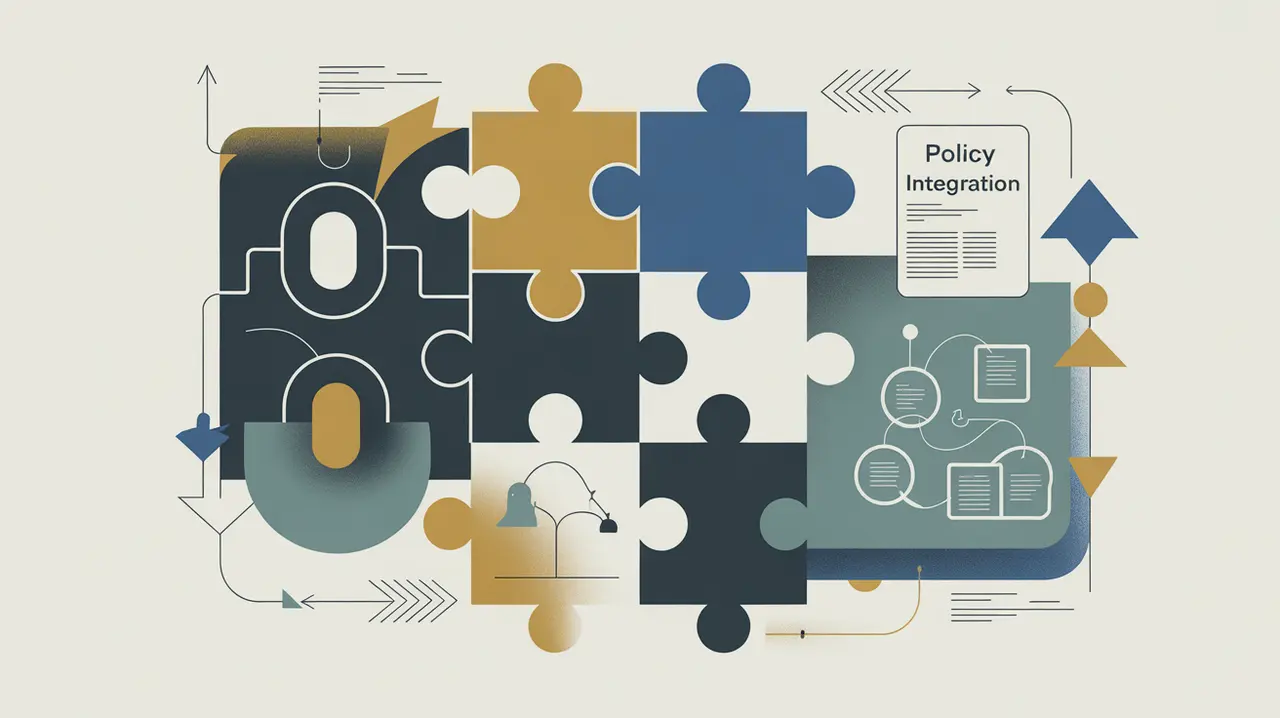
Importance of Policy Integration
Policy integration is essential for ensuring that development strategies are coherent, efficient, and mutually reinforcing across sectors. In international development, fragmented or siloed policies often undermine progress, while integrated approaches align health, education, environment, and economic priorities to maximize impact. For nonprofits and social innovators, policy integration matters because it reduces duplication, promotes collaboration, and ensures that diverse needs are addressed holistically. Its importance lies in creating systems-level change rather than isolated interventions.
Definition and Features
Policy integration refers to the process of aligning and coordinating policies across sectors, institutions, or levels of governance to achieve common goals. Its defining features include:
- Cross-Sector Coherence: harmonizing policies in areas such as health, environment, and trade.
- Efficiency: reducing overlap and resource waste.
- Inclusivity: considering multiple stakeholder perspectives in design and implementation.
- Sustainability: ensuring that policies reinforce long-term outcomes rather than compete.
How this Works in Practice
In practice, policy integration may involve linking climate policies with agricultural and health strategies, or aligning education policies with labor market demands. For example, a government may design integrated food security policies that connect nutrition, agriculture, and social protection. NGOs and development agencies often advocate for integrated approaches to avoid siloed programming. Challenges include institutional fragmentation, competition for resources, and political resistance to cross-sector collaboration.
Implications for Social Innovation
Policy integration has significant implications for social innovation because it creates environments where solutions can address interconnected problems. Innovations such as cross-sector task forces, participatory policymaking, and integrated monitoring systems support coherence and inclusivity. For proximate actors, policy integration ensures that local priorities are not lost within fragmented systems. Policy integration is essential for advancing holistic and sustainable development.