Importance of Multisector Cross-cutting
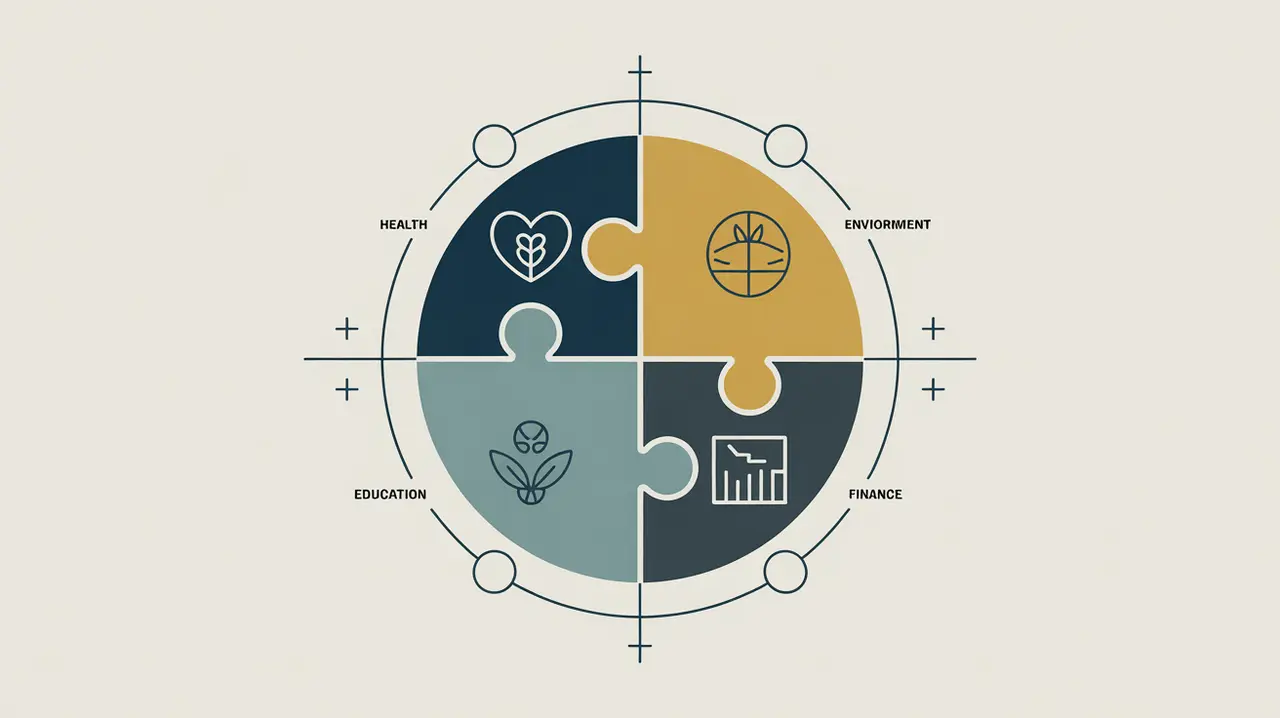
Multisector cross-cutting approaches are essential for addressing complex development challenges that span across traditional sector boundaries. Issues such as climate change, gender equity, digital inclusion, and governance cannot be solved in isolation; they require integrated strategies that draw on multiple fields. In international development, cross-cutting approaches ensure that interventions are holistic, efficient, and responsive to interconnected realities. For nonprofits and social innovators, they matter because tackling root causes often demands collaboration across education, health, environment, finance, and governance. Their importance lies in breaking down silos to deliver more sustainable and inclusive outcomes.
Definition and Features
Multisector cross-cutting refers to strategies, programs, or frameworks that integrate multiple sectors to address overlapping challenges. Its defining features include:
- Integration: combining expertise and resources from diverse fields.
- Efficiency: reducing duplication and maximizing impact by aligning interventions.
- Equity Lens: ensuring cross-sectoral issues such as gender or inclusion are embedded across all initiatives.
- Systems Thinking: recognizing interdependencies between social, economic, and environmental domains.
How this Works in Practice
In practice, multisector cross-cutting approaches are implemented through partnerships, policy frameworks, and collaborative projects. For example, programs addressing food security may combine agriculture, nutrition, water, and education, while climate action may cut across energy, transport, and governance. Donors and governments often require cross-cutting priorities—such as gender or environmental safeguards—to be integrated into all funded programs. Challenges include coordination difficulties, institutional silos, and the complexity of measuring shared outcomes.
Implications for Social Innovation
Multisector cross-cutting approaches have significant implications for social innovation because they encourage collaboration, creativity, and system-wide solutions. Innovations such as integrated service delivery platforms, multisector data dashboards, and coalition-based advocacy expand the reach and effectiveness of interventions. For proximate actors, cross-cutting approaches ensure that solutions reflect the full complexity of their lived realities. Multisector cross-cutting is essential for achieving inclusive, resilient, and sustainable development.