Importance of Latency, Throughput, Concurrency
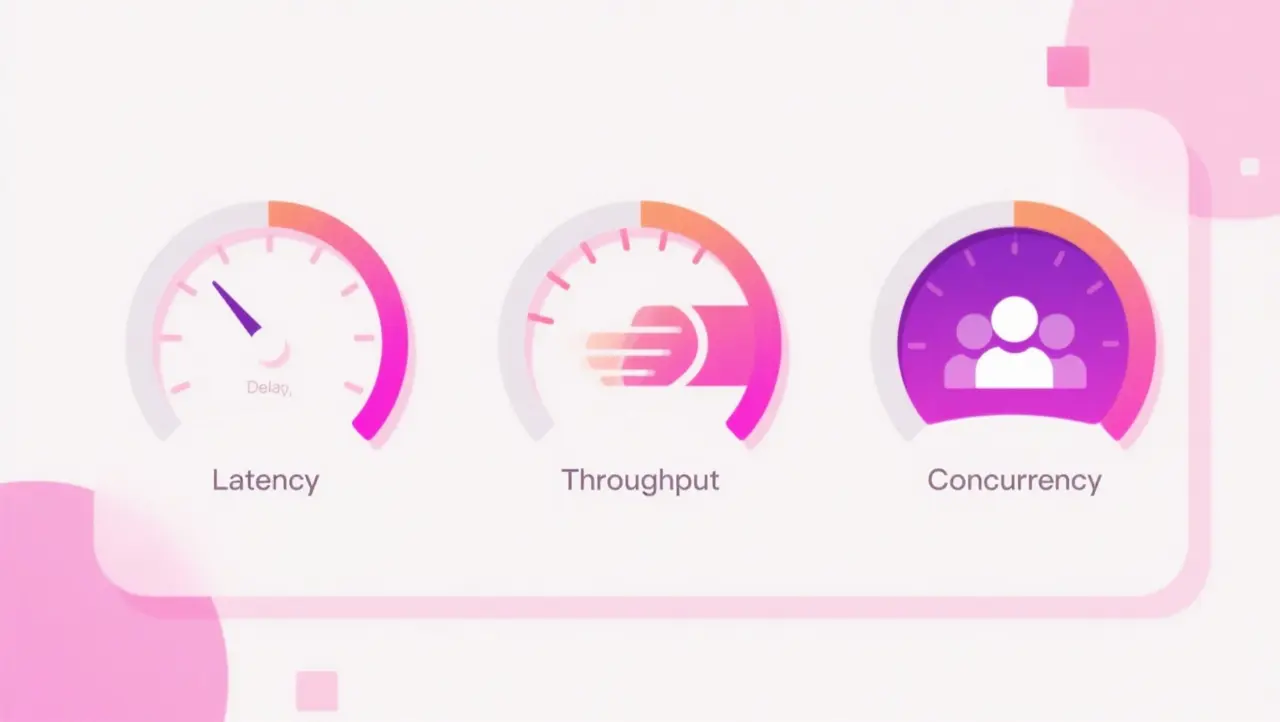
Latency, throughput, and concurrency are three fundamental measures of system performance. Latency refers to the time it takes for a request to be processed, throughput is the total number of requests a system can handle over time, and concurrency describes how many tasks or requests can be processed simultaneously. Their importance today lies in the scaling of AI and digital platforms that must serve millions of users efficiently.
For social innovation and international development, these measures matter because technology deployed in the field often faces constraints. Systems must deliver reliable performance in areas with limited bandwidth, during surges in demand, or when multiple users access services at once. Understanding these concepts helps organizations choose or design tools that remain useful under real-world conditions.
Definition and Key Features
Latency is typically measured in milliseconds and represents how quickly a user receives a response. High latency can frustrate users or limit system usability, especially in real-time applications. Throughput measures the volume of work a system completes in a set period, often expressed as transactions per second. Concurrency focuses on the ability to handle multiple simultaneous requests without degradation.
They are not interchangeable. A system with high throughput may still suffer from high latency, and high concurrency does not guarantee good performance if throughput is low. Together, these metrics provide a comprehensive picture of system capacity and responsiveness, shaping how applications perform at scale.
How this Works in Practice
In practice, latency can be reduced by optimizing code, using caching, or placing servers closer to users. Throughput can be increased with parallel processing, distributed systems, or more powerful hardware. Concurrency is often improved by designing systems to handle asynchronous tasks and manage resources efficiently. Monitoring tools provide visibility across these dimensions, enabling teams to diagnose bottlenecks and improve user experience.
Challenges arise in balancing trade-offs. Reducing latency may increase infrastructure costs, while maximizing concurrency can introduce complexity in coordination. Mission-driven organizations must prioritize which measure matters most for their use case, such as responsiveness in health consultations or throughput in large-scale data analysis.
Implications for Social Innovators
Latency, throughput, and concurrency directly affect the usability of digital systems in mission-driven work. Health platforms require low latency to support telemedicine consultations in real time. Education systems benefit from high concurrency to serve many students simultaneously during online classes. Humanitarian platforms need high throughput to process massive datasets like crisis surveys or satellite images.
By monitoring and optimizing these performance measures, organizations can ensure their AI and digital tools remain practical and reliable in diverse, resource-constrained environments.