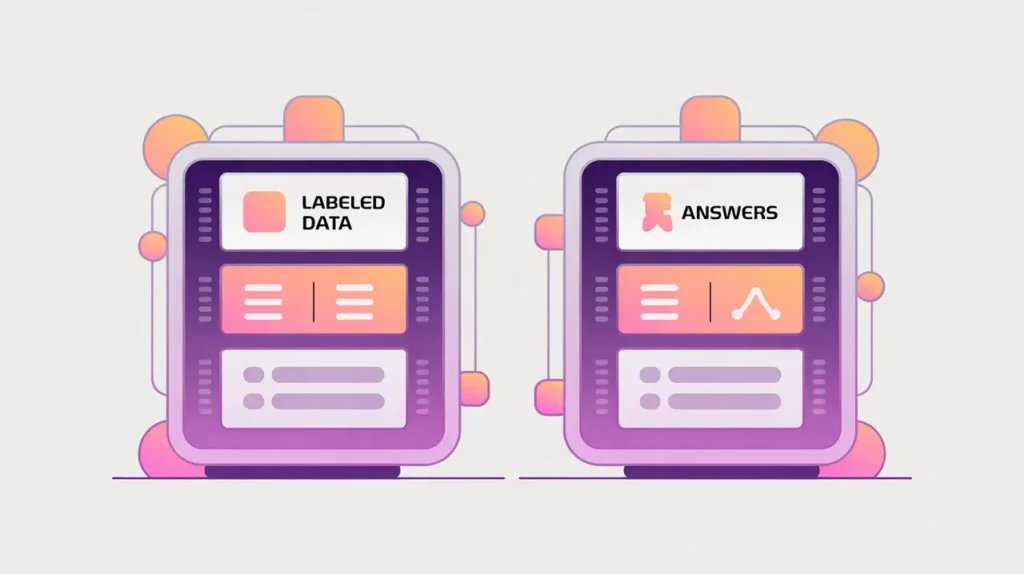
Importance of Model Evaluation for LLMs
Model evaluation for large language models (LLMs) is the process of systematically assessing how well these systems perform across dimensions such as accuracy, fairness, safety, and efficiency. Its importance today stems from the rapid integration of LLMs into everyday tools and critical services. Without rigorous evaluation, organizations risk deploying systems that generate biased, incorrect, or harmful outputs. Evaluation is not only about benchmarking performance but also about ensuring trust and accountability in how these models are used.
For social innovation and international development, model evaluation matters because the consequences of AI missteps can disproportionately affect vulnerable populations. A model that performs well in one language or cultural context may fail in another. Evaluating models with attention to diversity, inclusion, and local relevance ensures that the benefits of AI are shared more equitably.
Definition and Key Features
Model evaluation involves testing an LLM against datasets and criteria designed to measure specific qualities. Standard metrics include accuracy, precision, recall, and F1 score for factual correctness, as well as human evaluation for fluency and relevance. More recent frameworks add dimensions such as robustness against adversarial prompts, sensitivity to bias, and alignment with ethical guidelines.
It is not the same as training, which focuses on improving model performance, nor is it equivalent to monitoring, which tracks outputs once the model is in deployment. Instead, evaluation provides a structured checkpoint before and during deployment, helping organizations understand what a model can and cannot do. This makes evaluation an essential step in responsible AI adoption.
How this Works in Practice
In practice, model evaluation for LLMs often uses a mix of quantitative and qualitative methods. Quantitative benchmarks test performance on standardized tasks such as translation, summarization, or reasoning. Qualitative evaluations involve human reviewers who assess whether outputs are contextually accurate, culturally sensitive, and ethically acceptable. Domain-specific evaluation adds another layer, tailoring tests to health, education, agriculture, or governance contexts.
Challenges in evaluation include the lack of universally agreed benchmarks, the difficulty of measuring creativity or nuance, and the resource demands of testing large models across multiple languages and scenarios. Despite these challenges, evaluation is becoming a core competency for organizations adopting LLMs, as it informs procurement, deployment, and oversight decisions.
Implications for Social Innovators
For mission-driven organizations, robust evaluation is vital. In education, it ensures AI tutors align with local curricula and do not propagate misinformation. In healthcare, it verifies that systems generating patient information adhere to medical standards. In humanitarian contexts, it tests whether models can handle multilingual feedback without distorting meaning.
Model evaluation gives organizations the evidence they need to deploy LLMs responsibly, protecting communities while maximizing impact.