Importance of Privacy Threats and Data Leakage
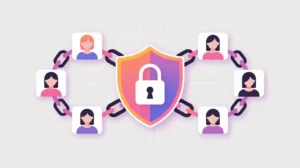
Privacy Threats and Data Leakage describe the risks of sensitive information being exposed (intentionally or unintentionally) through AI systems and data workflows. Leakage may occur when training data is memorized and reproduced, when weak anonymization fails, or when access controls are poorly designed. Its importance today lies in the fact that AI systems increasingly process personal, health, financial, and humanitarian data at scale, raising the stakes of privacy violations.
For social innovation and international development, privacy threats and data leakage matter because mission-driven organizations often work with vulnerable populations whose trust depends on safeguarding their data. Breaches can lead to harm, discrimination, or loss of community confidence in critical services.
Definition and Key Features
Privacy threats can take many forms: inadvertent exposure of identifiers in open datasets, insecure APIs, or malicious attacks that probe models for hidden information. Leakage is especially concerning in generative AI, where models sometimes reproduce fragments of their training data.
This is not the same as deliberate data sharing under governance frameworks, nor is it equivalent to adversarial data exfiltration. Privacy threats and leakage emphasize the unintended, systemic risks that occur when safeguards are insufficient.
How this Works in Practice
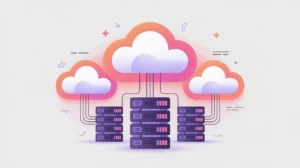
In practice, data leakage can occur when a model trained on medical records reproduces patient details in its outputs, or when anonymized survey data is re-identified by linking with external datasets. Organizations mitigate these risks through encryption, differential privacy techniques, secure enclaves, and strong access controls. Monitoring and regular audits are also critical to detect leakage before harm occurs.
Challenges include the difficulty of fully anonymizing data, the trade-off between model utility and privacy protection, and the lack of awareness in smaller organizations about advanced safeguards. Regulatory compliance (e.g., GDPR, HIPAA) adds another layer of complexity.
Implications for Social Innovators
Privacy threats and data leakage are particularly sensitive in mission-driven contexts. Health programs must protect patient records to maintain trust in care. Education initiatives handling student performance data must prevent exposure that could harm children. Humanitarian agencies working with refugees must ensure registries and biometric data are secure from exploitation. Civil society groups advocate for strong privacy standards and transparency around data use.
By addressing privacy threats and preventing leakage, organizations strengthen community trust, uphold rights, and protect the people they serve.