What Does the Risk Clerk Role Involve?
A Risk Clerk is responsible for handling routine administrative and clerical tasks that support the organization’s risk management processes. They focus on maintaining accurate records, updating risk documentation, processing standard forms or entries, and ensuring that information flows efficiently between departments involved in risk monitoring and mitigation. Their work provides the organizational backbone needed to keep risk management systems current and reliable.
In nonprofits and social enterprises, Risk Clerks play a key role in ensuring that risk registers, compliance files, and monitoring documents are accurate, accessible, and properly maintained, supporting both day-to-day operations and strategic oversight.
At What Level does this Role Operate?
Entry Level: Risk Clerks typically report to a Risk Assistant, Risk Analyst, or Risk Manager. They perform routine data entry, filing, and documentation tasks, with close supervision and structured workflows. Their responsibilities are foundational to the smooth functioning of the risk management process.
Relative Employability: Risk Clerk roles are emerging in larger nonprofits, NGOs, and social enterprises as risk management functions become more formalized. They offer a practical entry point for individuals interested in administrative work within compliance, risk, or operations teams.
Relative Pay Scale: Risk Clerks generally occupy the lower pay bands, similar to other clerical positions across finance, operations, or administrative departments.
What are the Key Responsibilities and Activities?
- Enter data into risk registers or databases accurately and on time
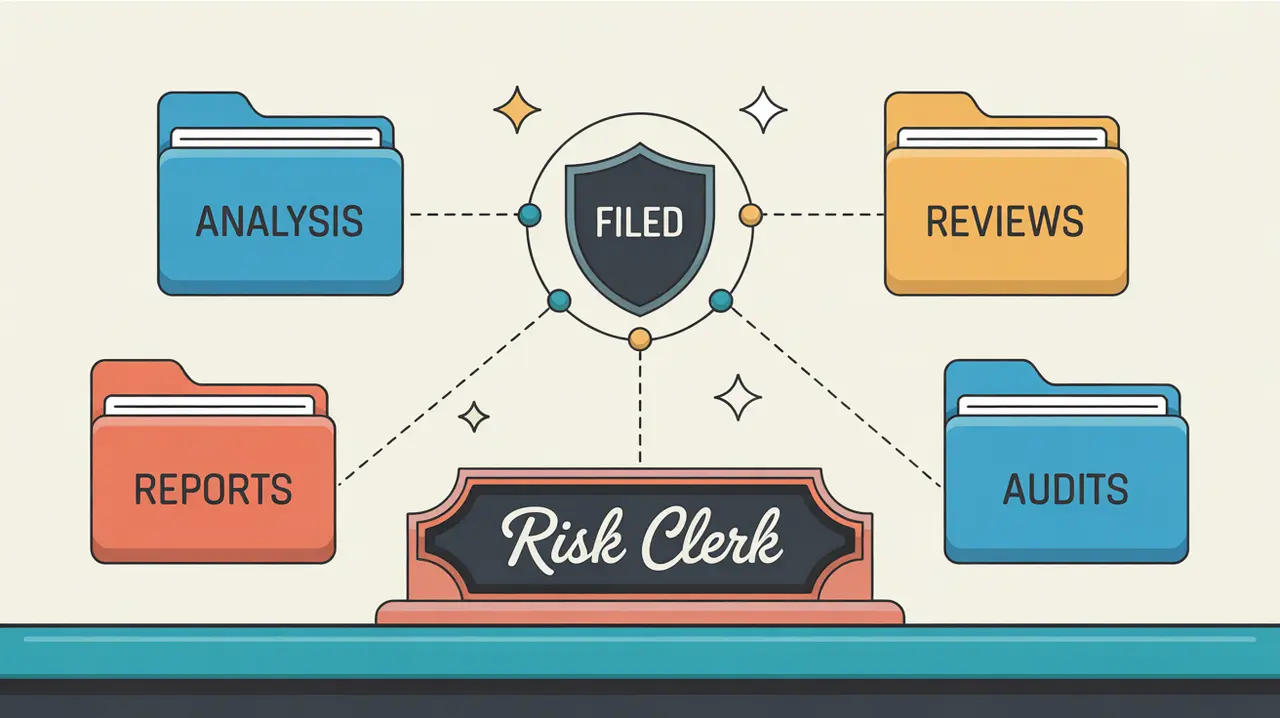
- File, organize, and maintain risk documentation, including assessments, policies, and reports
- Process routine updates to risk records, such as status changes or mitigation tracking
- Assist in distributing risk-related reports, summaries, and communications to relevant teams
- Support scheduling and basic logistics for risk review meetings and training sessions
- Monitor document completeness and follow up on missing information as needed
- Maintain confidentiality and data integrity in all clerical tasks
- Provide general clerical support to risk management and compliance teams
What Core Competencies and Qualifications are Needed?
Required Qualifications and Experience
The following reflect common qualifications and experience expected for this role, while recognizing that pathways may vary by context, organization, and region.
- Relevant academic background in administration, business, or related fields (certificate or diploma level is often sufficient)
- Experience in clerical, administrative, or data entry roles is advantageous but not always required
- Familiarity with spreadsheets, databases, and filing systems
- Interest in risk management, compliance, or organizational operations
Key Competencies
- Attention to detail and accuracy in data entry and documentation
- Organizational skills to manage files and records systematically
- Ability to follow structured procedures and workflows
- Clear written and verbal communication skills
- Professionalism and discretion in handling sensitive information
- Reliability and consistency in task execution
How are AI and Automation Shaping this Role?
An AI-native Risk Clerk can use AI tools to automate routine data entry, validate information against risk frameworks, and generate reminders for updates or follow-ups. AI can also support document organization and retrieval, making clerical processes more efficient and less error-prone. This allows clerks to focus on maintaining accuracy and supporting higher-level risk analysis and reporting functions.
What Career Pathways and Transferable Skills are Associated with this Role?
Risk Clerks can progress to roles such as Risk Assistant, Administrative Officer, Compliance Assistant, or Operations Associate. Their skills in data entry, documentation, and administrative workflows are transferable to a range of support roles across finance, operations, and compliance. Over time, they may develop expertise in risk frameworks, move into analytical roles, or specialize in regulatory compliance and organizational governance.