What Does the Policy Analyst Role Involve?
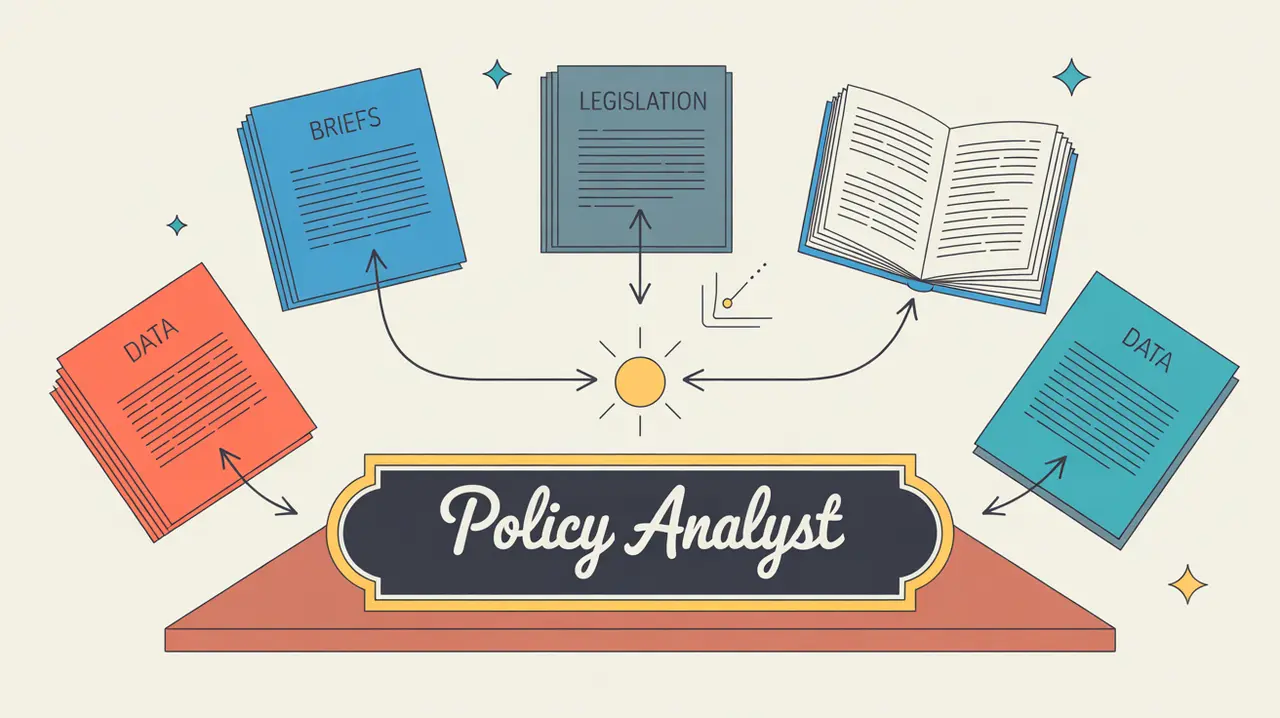
A Policy Analyst is responsible for researching, analyzing, and interpreting policies, regulations, and legislative developments that affect an organization’s work. They evaluate policy trends, assess their implications, and develop recommendations to inform organizational strategies, advocacy efforts, or program design. Policy Analysts often synthesize complex information into clear briefs, reports, and presentations for internal and external stakeholders.
In nonprofits and social enterprises, Policy Analysts play a key role in shaping evidence-based advocacy, informing strategic decisions, and ensuring that organizational positions are grounded in rigorous analysis and contextual understanding.
At What Level does this Role Operate?
Mid Level: Policy Analysts typically operate with moderate autonomy, reporting to a Policy Lead, Director of Policy and Advocacy, or Executive Director. They work closely with program, communications, and external affairs teams to align analysis with organizational priorities.
Relative Employability: Policy Analyst roles are in strong demand across nonprofits, think tanks, advocacy groups, international NGOs, and social enterprises that engage in policy influence or systems change. Their analytical and research skills are valued in diverse fields including education, health, environment, and governance.
Relative Pay Scale: Policy Analysts generally sit in the mid pay band. Compensation reflects their analytical expertise and strategic contributions, sitting above assistant or associate roles but below senior policy or leadership positions.
What are the Key Responsibilities and Activities?
- Conduct research and analysis on policy issues, legislation, and regulatory developments
- Synthesize complex policy information into clear briefs, reports, or presentations
- Assess the implications of policy trends for organizational strategies, programs, and stakeholders
- Develop evidence-based recommendations to inform advocacy or programmatic action
- Track legislative and regulatory developments relevant to the organization’s mission
- Engage with internal teams to integrate policy insights into program and strategy development
- Support the drafting of policy statements, position papers, or submissions to government bodies
- Contribute to external communications by providing policy content for publications, events, or media
What Core Competencies and Qualifications are Needed?
Required Qualifications and Experience
The following reflect common qualifications and experience expected for this role, while recognizing that pathways may vary by context, organization, and region.
- Relevant academic background in public policy, law, political science, economics, or related fields
- Several years of experience in policy research, analysis, or advocacy
- Strong understanding of legislative and regulatory processes
- Experience preparing policy briefs, reports, or position papers
- Familiarity with the policy landscape relevant to the organization’s focus areas
Key Competencies
- Excellent research and analytical skills
- Ability to interpret and synthesize complex policy information clearly
- Strong written and verbal communication abilities
- Strategic thinking to connect policy developments with organizational goals
- Attention to detail and accuracy in policy interpretation
- Ability to work collaboratively across teams and with external stakeholders
How are AI and Automation Shaping this Role?
An AI-native Policy Analyst can use AI tools to monitor legislative developments in real time, summarize lengthy documents, and analyze large policy datasets more efficiently. Natural language processing can rapidly extract key themes and trends from regulatory texts, while AI-assisted drafting can accelerate the preparation of briefs and position papers. These tools allow analysts to spend more time on interpretation, scenario analysis, and strategic recommendations.
What Career Pathways and Transferable Skills are Associated with this Role?
Policy Analysts can progress to roles such as Policy Lead, Advocacy Manager, Director of Policy and External Affairs, or Senior Research Fellow. Their analytical and strategic skills are transferable to roles in government, think tanks, consulting, and program strategy. Over time, they may take on leadership of policy portfolios, shape organizational advocacy agendas, or engage directly in legislative and regulatory processes at senior levels.