What Does the Evaluation Manager Role Involve?
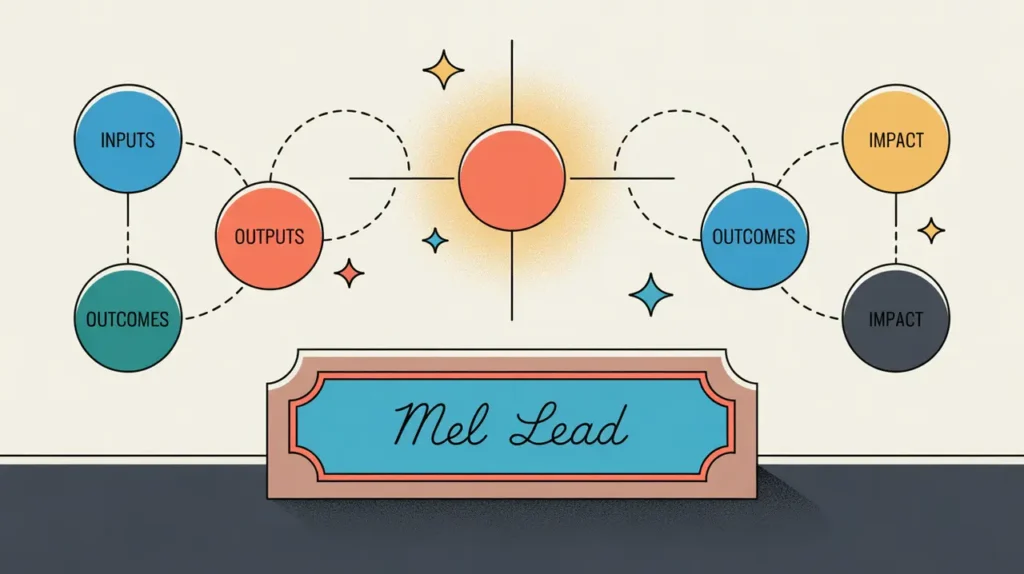
An evaluation manager is responsible for leading the design, implementation, and oversight of monitoring and evaluation (M&E) frameworks, ensuring that programs and initiatives generate reliable evidence to inform decision making and demonstrate impact. This includes managing data systems, overseeing the collection and analysis of quantitative and qualitative data, coordinating evaluation activities across teams, and producing insights that inform strategy. The role typically sits within the monitoring, evaluation, and learning (MEL) or research and insights function and works closely with program leaders, data specialists, and external evaluators. In both nonprofits and social enterprises, evaluation managers play a central role in building strong MEL systems that support accountability, learning, and improvement.
At What Level does this Role Operate?
Mid Level: This role typically reports to a MEL director, head of research and insights, or equivalent senior leader. It often includes supervisory responsibilities for assistants, associates, or officers, and involves translating organizational learning priorities into actionable evaluation plans.
Relative Employability: Evaluation manager roles are in high demand among nonprofits, social enterprises, international NGOs, and development agencies. As organizations increasingly focus on evidence-based approaches, skilled evaluation managers are essential for ensuring data quality and analytical rigor.
Relative Pay Scale: Within nonprofits and social enterprises, evaluation manager roles fall within mid-level pay bands, reflecting their combination of technical expertise, coordination responsibilities, and strategic influence.
What are the Key Responsibilities and Activities?
- Design and oversee the implementation of monitoring and evaluation frameworks and plans
- Manage the collection, cleaning, analysis, and interpretation of quantitative and qualitative data
- Ensure data quality, consistency, and compliance with organizational and donor standards
- Supervise evaluation staff, providing technical guidance and capacity building
- Coordinate evaluation activities across programs and departments, ensuring alignment with strategic goals
- Commission and manage external evaluations, including scoping, contracting, and oversight
- Produce reports, presentations, and dashboards that communicate findings to stakeholders and inform decision making
- Contribute to organizational learning by synthesizing insights and lessons learned
- Advise leadership and program teams on the integration of evidence into planning and strategy
What Core Competencies and Qualifications are Needed?
Required Qualifications and Experience
The following reflect common qualifications and experience expected for this role, while recognizing that pathways may vary by context, organization, and region.
- Relevant academic background in social sciences, economics, statistics, development studies, or related fields, or equivalent professional experience
- Several years of experience in monitoring and evaluation, research, or data analysis roles
- Proven ability to design and manage evaluation frameworks and lead teams
- Proficiency with quantitative and qualitative data analysis tools and methods
- Strong communication and facilitation skills, with the ability to translate data into actionable insights
- Familiarity with donor reporting standards and MEL requirements
Key Competencies
- Evaluation framework design and implementation
- Data quality assurance and analytical rigor
- Team leadership and capacity building
- Cross-functional coordination and stakeholder management
- Strategic insight generation and reporting
- Commissioning and managing external evaluations
How are AI and Automation Shaping this Role?
An AI-native evaluation manager will look to AI and automation to strengthen data quality, accelerate analysis, and enhance insight generation. They can use AI tools to automate data cleaning, identify anomalies, run advanced analytics, and generate visualizations and summaries. Automation can streamline reporting processes, integrate data from multiple sources, and manage survey administration workflows. By leveraging these technologies strategically, evaluation managers can focus more on interpretation, learning facilitation, and organizational strategy, while ensuring that MEL systems are both efficient and robust.
What Career Pathways and Transferable Skills are Associated with this Role?
Evaluation manager roles can lead to positions such as MEL director, head of research and insights, or director of strategy and learning. The skills developed in evaluation design, analytical leadership, and organizational learning are highly transferable across nonprofits, social enterprises, philanthropic organizations, government agencies, and research institutions. This role provides a strong platform for advancing into senior leadership positions focused on evidence, strategy, and impact.