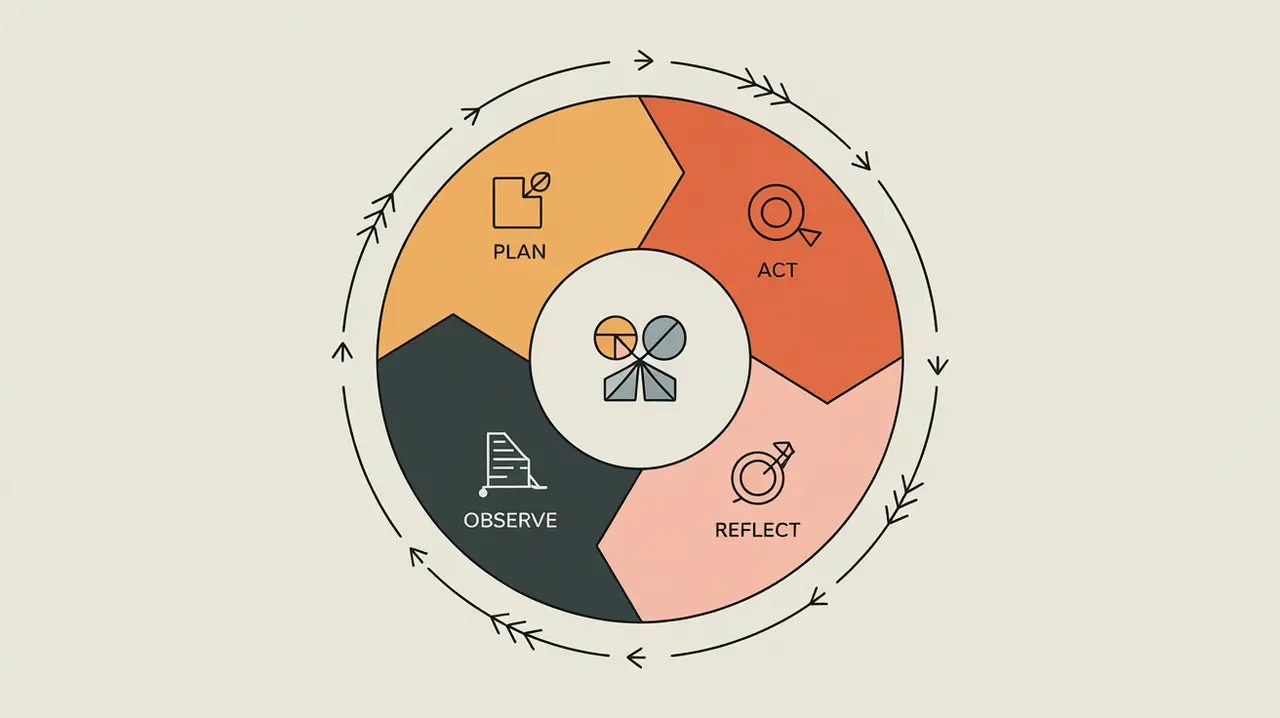
Importance of Action Research
Action research links inquiry with practice by engaging stakeholders directly in cycles of reflection and action. It is important because traditional research often produces knowledge without changing practice, while social challenges require immediate and adaptive solutions. In development and social innovation, action research matters because it generates insights in real time, empowers participants, and ensures interventions evolve with context.
Definition and Features
Action research is a participatory approach where researchers and practitioners collaborate to solve problems while simultaneously generating knowledge. Its defining features include:
- Participation – involves stakeholders as co-researchers, not just subjects.
- Iterative Cycles – follows cycles of planning, action, observation, and reflection.
- Practical Orientation – seeks to improve practice while building knowledge.
- Empowerment – values proximate voices and strengthens local capacity.
- Contextual Fit – adapts to local settings and evolving challenges.
How this Works in Practice
In practice, action research may involve teachers testing new instructional methods in classrooms, communities co-designing water management systems, or health workers refining service delivery with ongoing feedback. For example, participatory rural appraisal techniques embody action research principles by engaging communities directly in assessing and addressing local needs. Challenges include balancing rigor with responsiveness, managing power dynamics, and ensuring findings are documented beyond the immediate project.
Implications for Social Innovation
Action research strengthens social innovation by making learning continuous and embedded in practice. For practitioners, it offers a structured way to adapt strategies in real time. For funders, it highlights the value of flexible support that enables experimentation and reflection. Action research can bridge knowledge and action, creating solutions that are context-specific.