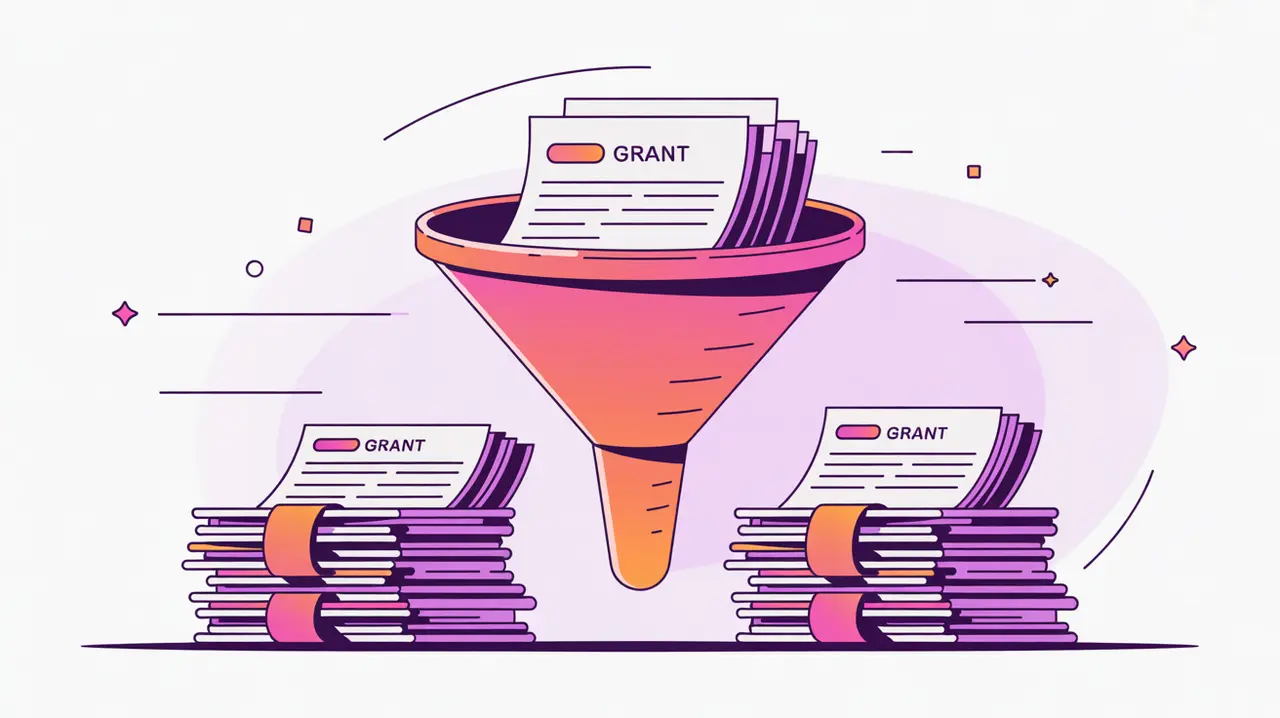
Importance of Grant Triage and Review Assistance
Grant Triage and Review Assistance uses AI and workflow automation to streamline the process of evaluating funding proposals. Triage refers to the rapid sorting of applications into categories (such as eligibility, priority, or risk), while review assistance helps evaluators by highlighting key information, summarizing proposals, and scoring against criteria. Their importance today lies in reducing administrative burdens and enabling funders to process large volumes of applications more efficiently and transparently.
For social innovation and international development, grant triage and review assistance matter because both donors and applicants invest significant resources into the grant cycle. By automating repetitive tasks, these tools allow human reviewers to focus on quality, equity, and impact rather than paperwork.
Definition and Key Features
These systems rely on natural language processing, document classification, and scoring algorithms. They extract structured data from proposals, check eligibility requirements, and cluster similar applications for comparison. Some platforms integrate directly with grant management systems, offering dashboards that track progress and ensure accountability.
They are not the same as full grant management platforms, which oversee the entire grant lifecycle. Nor are they equivalent to human review alone, which is often slower and less consistent. Grant triage and review assistance specifically targets the intake and evaluation phases.
How this Works in Practice
In practice, AI-driven triage can flag incomplete or ineligible applications, summarize key budget lines, and match proposals to thematic areas of interest. Review assistance tools can suggest relevance scores, surface potential red flags, or provide context from past applications. This reduces bottlenecks while maintaining fairness. Transparency mechanisms, including audit logs and reviewer overrides, are essential for building trust in automated assistance.
Challenges include the risk of bias if algorithms are trained on unrepresentative data, the need to maintain human oversight for equity considerations, and concerns over privacy when handling sensitive organizational information. Funders must balance efficiency with responsibility.
Implications for Social Innovators
Grant triage and review assistance directly benefit mission-driven ecosystems. Health funders can quickly process large volumes of clinic or research grant requests. Education donors can identify promising innovations while reducing time spent on administrative screening. Humanitarian agencies can accelerate funding cycles during emergencies, ensuring rapid disbursement of resources. Civil society grantmakers can ensure fairness by using triage tools to surface smaller or overlooked applicants alongside larger institutions.
By combining automation with human judgment, grant triage and review assistance improves efficiency, transparency, and equity in resource allocation.