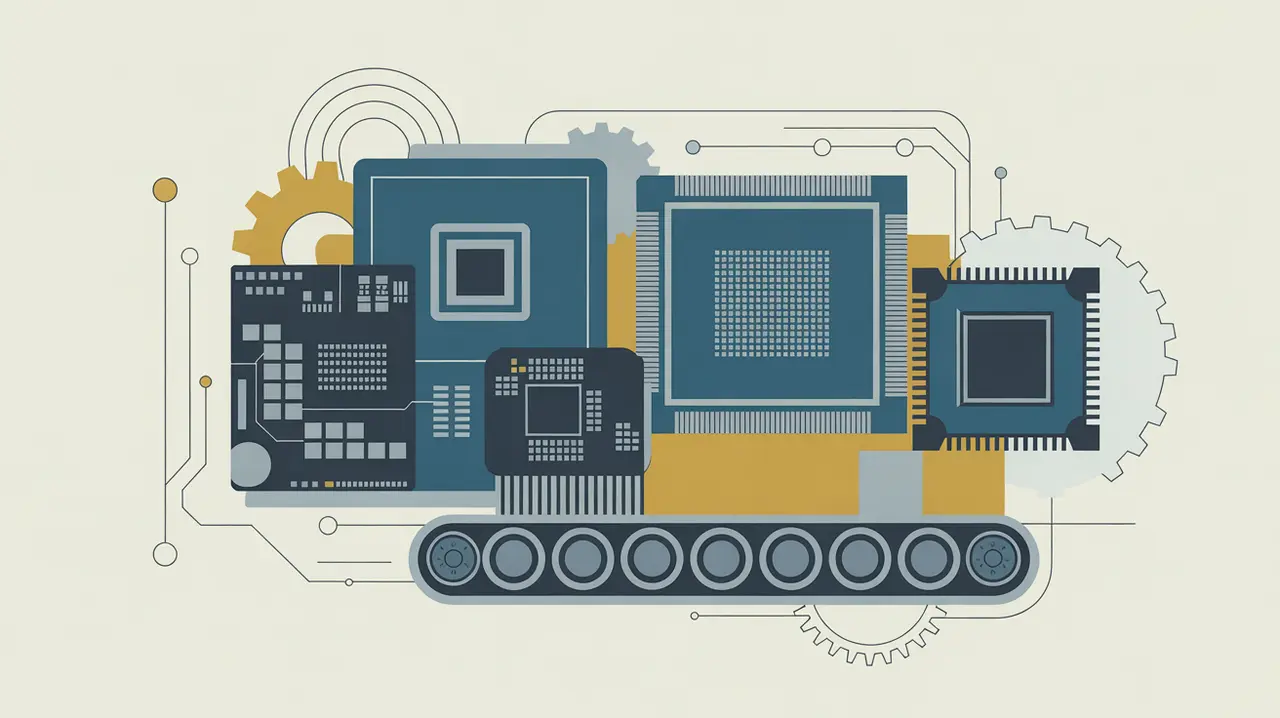
Importance of Hardware Manufacturing
Hardware manufacturing is central to the production of physical tools and devices that enable communication, education, health care, and industrial development. In international development, it underpins access to technology by making devices like computers, medical equipment, and agricultural machinery available and affordable. For nonprofits and social innovators, hardware manufacturing matters because it determines whether proximate communities can access the infrastructure and devices needed to participate in digital economies and modern service delivery.
Definition and Features
Hardware manufacturing refers to the design, production, and assembly of physical technological components and devices. Its defining features include:
- Product Diversity: spanning consumer electronics, industrial machinery, medical devices, and agricultural tools.
- Complex Supply Chains: reliant on global networks of parts, assembly, and distribution.
- Capital Intensity: requiring significant investment in facilities, equipment, and expertise.
- Innovation Dependency: closely linked to advances in engineering, materials science, and design.
How this Works in Practice
In practice, hardware manufacturing involves both large multinational corporations and small local producers. For example, international firms may produce laptops or smartphones used in digital learning, while local workshops assemble low-cost medical devices for rural clinics. Development programs often support small-scale hardware innovators through maker spaces, vocational training, and access to financing. Challenges include dependence on imported components, high costs of production, rapid obsolescence, and e-waste management.
Implications for Social Innovation
Hardware manufacturing has strong implications for social innovation because it shapes how ideas move from prototypes to real-world tools. Innovations such as open-source hardware, modular design, and circular economy models can expand affordability and sustainability. For proximate actors, local manufacturing capacity reduces reliance on imports and ensures solutions are tailored to context. Hardware manufacturing is essential for enabling access to technology and supporting inclusive development.